

Executive Summary
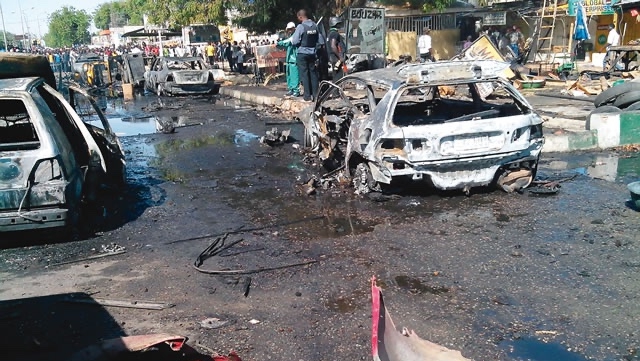
Maiduguri, Borno State, recently experienced a series of devastating suicide bomb explosions, attributed to suspected Boko Haram terrorists.
These attacks, occurring at three distinct locations—the Post Office area, Monday Market axis, and entrance to University of Maiduguri Teaching Hospital—resulted in significant casualties and have prompted intensified security measures.
The incidents have drawn widespread condemnation and sparked a critical debate among prominent Nigerian figures regarding the efficacy of current security strategies and the government’s response to the resurgence of terrorism.

Incident Details
On the evening of the attacks, suspected Boko Haram suicide bombers detonated improvised explosive devices at three locations within Maiduguri Metropolitan Council during the period of Iftar.
The Headquarters Joint Task Force Operation HADIN KAI (OPHK), in collaboration with the Nigeria Police Explosive Ordnance Disposal (EOD) Team and other security agencies, swiftly responded.
They secured and cordoned off the affected areas to prevent further harm. Emergency response teams, including personnel from the National Emergency Management Agency. And also medical service providers, evacuated casualties to the General Hospital, Specialist Hospital, and the University of Maiduguri Teaching Hospital for urgent medical attention.
Security Response and Public Advisory
In the aftermath of the bombings, security forces have intensified surveillance, patrols, and counter-IED measures across Maiduguri to track down suspects and prevent future attacks.
Operation HADIN KAI has urged the public to remain calm but vigilant, avoid crowded areas, and promptly report any suspicious activities or unattended items to the nearest security agency.  The operation also extended its condolences to the victims’ families and reaffirmed its commitment to safeguarding lives and property while pursuing terrorist elements.
Reactions and Political Commentary
The bombings have elicited strong reactions from various political figures, highlighting a divergence in perspectives on the security situation in Nigeria.
President Bola Ahmed Tinubu in his statement expressed profound sorrow for the victims and solidarity with the people of Borno. He characterized the attacks as
“final desperate and frantic attempts by criminals and terrorist elements trying to instil and spread fear, as they are under constant pressure from our brave armed forces and security agencies operating in various theatres.”
He affirmed the government’s commitment to intensifying efforts against all criminal elements and commended the courage of the troops who repelled coordinated attacks on military positions.
President Tinubu also announced that he had approved additional equipment and operational support for security agencies and directed security chiefs to move to Maiduguri to take charge of the situation. He further instructed emergency agencies to provide proper care for the injured, vowing that terrorists would find no safety in Nigeria and would be located, confronted, and defeated.
Former Vice President, Atiku Abubakar on X expressed deep sadness over the terrorist attacks and the resurgence of suicide bombings.
He noted that the increased waves of killings by terrorists are reviving “sad memories of 2014 when Boko Haram was most active in the country.” While commending the sacrifices of servicemen, Abubakar urged the Tinubu administration to review its strategies, stating that the resurgence of terrorism could erode public confidence.
He criticized the govt for being “more obsessed with crushing opposition politicians than it is with fixing the worsening security challenges” and for dismissing honest advice as politically motivated.
Atiku highlighted the plight of a mother in Maiduguri who is “asking why her child was blown apart in a place the govt claimed was ‘liberated,’” and questioned the President’s state visit to Britain while “body parts are being gathered in Borno.” He concluded by asserting that “A government that treats funerals as routine and criticism as treason has lost the moral authority to lead,” and that campaigning for 2027 on the “graves of the people you failed to protect in 2026” is unacceptable.
The Former Senate President, Bukola Saraki on X expressed outrage at the explosions, which he stated claimed the lives of over 20 people and injured more than 100.
He condemned the act as “despicable… cowardice that defies our shared humanity.” Saraki urged residents to remain calm yet vigilant and to report suspicious activities. The ex-Senate President called upon security agencies to intensify operations, track down those responsible, and reinforce efforts to eliminate threats entirely, emphasizing the need to fortify defenses and prevent further incidents.
He extended his condolences to the victims, their families, and the Borno State Government.
Former Kano State Governor, Rabiu Musa Kwankwaso conveyed deep sadness over horrific multiple suicide bombings, confirming that 23 innocent people were killed and over 100 injured, according to the Nigeria Police Force. He described these attacks as a “disturbing resurgence of senseless terrorism that threatens the peace our communities have struggled so hard to rebuild.”
Kwankwaso asserted that “This cannot be tolerated” and called for the full empowerment of armed forces to take decisive, proactive action against these enemies.
He urged both Federal and State governments to provide all necessary resources and support to enable troops to defeat terrorist networks. He also extended his heartfelt condolences to the bereaved families, the injured, and the people of Borno State.
Former Labour Party Presidential Candidate and ex-Governor, Peter Obi described the nation as “once again engulfed in grief and outrage” and stated that the tragic events serve as a “painful reminder of how far we’ve strayed from the fundamental duty of governance: the protection of lives and property.”
He highlighted the troubling reality of coordinated attacks in vulnerable places and suggested that the “silence from our nation in response to such atrocities indicates a disturbing normalization of insecurity.” Obi expressed concern over the pattern of insecurity across various states and alarming reports of communities paying a “Peace Tax” to armed groups.
He emphasized that such a grave national emergency requires immediate presence, attention, and action, suggesting the cancellation of planned trips to visit affected communities in favor of prioritizing efforts to safeguard lives.
He concluded with thoughts and prayers for the affected families and reiterated that “Our nation must rise to protect its citizens with urgency, responsibility, and compassion,” ending with the statement, “A New Nigeria is POssible.” Conclusion
The recent suicide bombings in Maiduguri have not only resulted in tragic loss of life and injury but have also ignited a critical national conversation about Nigeria’s security challenges.
While the govt, through President Tinubu, has vowed to intensify efforts against terrorism and provide support to security forces.
The opposition figures like Atiku Abubakar, Bukola Saraki, Rabiu Musa Kwankwaso, and Peter Obi have voiced strong criticisms regarding the effectiveness of current strategies and the perceived complacency of the administration.
The consensus among all parties is the urgent need for decisive action to protect citizens and restore peace in the affected regions, underscoring the profound impact of these events on the national psyche and political landscape.