

The Federal Government of Nigeria is making significant strides in its poverty reduction agenda through the Household Prosperity and Empowerment Cash Transfer Programme (HoPE-CT), an initiative described as one of the nation’s most ambitious social interventions.
With a goal to reach 15 million vulnerable households, the program has already provided critical support to over 9.2 million beneficiaries across the country, according to the statement released.
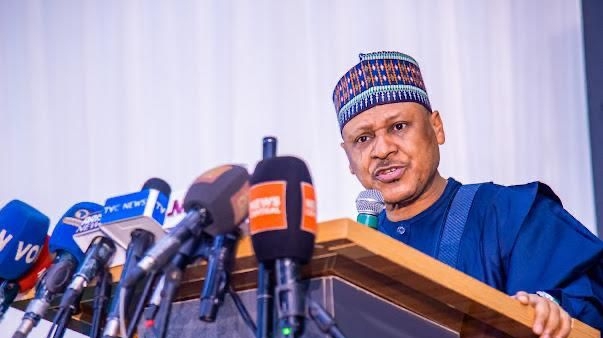
Speaking at the HoPE-CT Implementation Briefing and Press Conference in Abuja, the Minister of Information and National Orientation, Mohammed Idris, ably represented by Dr. Suleiman Haruna, emphasized that the program transcends mere statistics.

“The HoPE-CT programme is about restoring hope, expanding opportunities, and laying the foundation for inclusive prosperity. It demonstrates that government is attentive to the needs of its citizens, especially those at the grassroots,” the Minister stated.
Beyond direct cash transfers, the HoPE-CT initiative includes special uplift grants of ₦50,000 for 3.6 million families, further solidifying the government’s commitment to improving living conditions for its most vulnerable citizens.
The Minister urged media practitioners to focus on the human impact of these interventions, showcasing “before-and- after experiences that rekindle hope among Nigerians and strengthen trust in government.” The Federal Government’s Renewed Hope Agenda extends beyond HoPE-CT, encompassing a range of social intervention programs designed to promote social inclusion and alleviate poverty. These include:
National Social Investment Programme (NSIP): Reconfigured to offer non- collateral, interest-free loans of ₦300,000 to ₦400,000 for youth and women through cooperatives, alongside a revised N-Power program.
Student Loan Scheme: Over ₦95.6 billion approved to support Nigerian students in higher education. Government Enterprise and Empowerment Programme (GEEP): Continues to provide microloans to entrepreneurs, market women, and traders via schemes like TraderMoni.
3 Million Technical Talent Programme (3MTT): Aims to equip 3 million Nigerians with essential technical and digital skills. Skill-Up Artisans Programme (SUPA): Focuses on upgrading artisans’ skills through technology-enabled training. National Home-Grown School Feeding Programme: Repositioned to boost school enrollment and support local farmers. Consumer Credit Scheme: Backed with over ₦200 billion, enabling citizens to acquire goods without immediate cash payments.
Compressed Natural Gas (CNG) Initiative: Provides transport subsidies to reduce commuting costs. Livelihood Support Grants: Delivering nano-grants to 600,000 micro-businesses nationwide. LUMINAH 2030 Initiative: Designed to empower over one million women and girls through education and vocational training.
The Federal Ministry of Information and National Orientation affirmed its commitment to collaborating with relevant ministries and agencies to ensure effective dissemination of information and improved public engagement on government programs.
“As we receive feedback and fine-tune implementation, we will continue to listen, learn, and deliver. Together, we must keep building a Nigeria where no one is left behind,” Idris concluded, underscoring the administration’s dedication to a more prosperous and inclusive Nigeria.