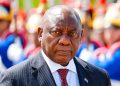

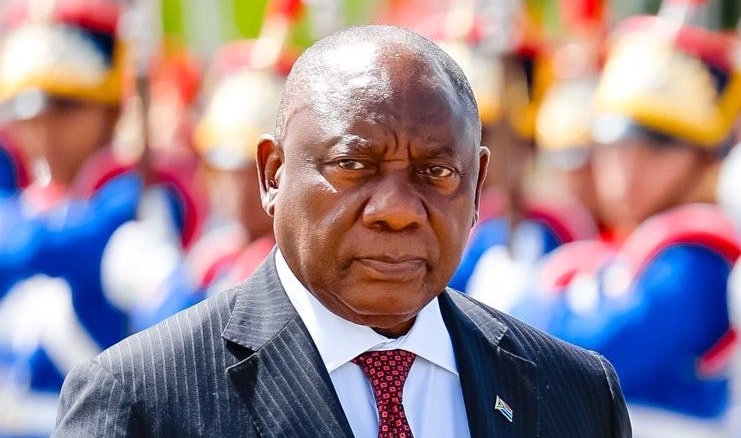
The South African President, Cyril Ramaphosa addressed the nation this evening, firmly stating his refusal to resign amidst the mounting pressure following a Constitutional Court judgment.
The President announced his intention to launch an expedited legal review of an independent panel’s report that had previously found prima facie evidence of serious misconduct against him.
The Constitutional Court’s ruling, handed down last week Friday, declared certain aspects of the National Assembly rules governing the removal of a President from office to be inconsistent with the Constitution.

Crucially, the judgment set aside the National Assembly’s December 2022 vote, which had previously dismissed the independent panel’s report, and ordered that the report now be referred to the Impeachment Committee of the National Assembly.
Ramaphosa acknowledged and respected the Constitutional Court’s decision, reiterating his unwavering commitment to the Constitution, the independence of the judiciary, and the rule of law.
However, he expressed strong disagreement with the independent panel’s initial findings from 2022, which stemmed from allegations related to
a theft at his farm in February 2020.  He maintained that these allegations were based on hearsay and lacked sufficient evidence to prove any serious violation of the Constitution or law.
“The complaints against me are based on hearsay allegations. No evidence, let alone sufficient evidence, has been presented to prove that I committed any violation.
“Let alone a serious violation of the Constitution or law, serious misconduct as set out in the Constitution,” stated by the S’African leader, quoting his earlier submission to the panel.Citing legal advice and the Constitutional Court’s own provision that the panel’s
recommendation must be implemented “unless and until the Report is set aside on review,” Ramaphosa confirmed his decision to challenge the report.
The President emphasized that this action is not out of disrespect for Parliament but to ensure the findings are legally and factually correct, especially as Parliament’s work would be based on a report he believes is flawed.
Addressing calls for his resignation, Ramaphosa was unequivocal: “I therefore respectfully want to make it clear that I will not resign.”  He clarified that the Constitutional Court made no finding on his alleged conduct, nor did it determine if there was prima facie evidence of misconduct or if such conduct would justify impeachment.
He argued that resigning would pre-empt a constitutional process, lend credibility to a flawed report, and abdicate his responsibilities as President.
Furthermore, he suggested that resignation would empower those seeking to undermine the country’s renewal efforts and the fight against corruption.President Ramaphosa affirmed his full intention to continue serving the people of South Africa, highlighting ongoing efforts to rebuild institutions, intensify the fight against organized crime, and implement recommendations from the State Capture Commission.
He expressed confidence in the nation’s future and its path towards renewal,
reconstruction, and sustainable development.
“Guided by the rule of law and the principle of accountability, I intend to fulfil and complete the mandate that you, the people, have given me,” he concluded, pledging to strengthen the democratic institutions and act in the best interests of the nation.