


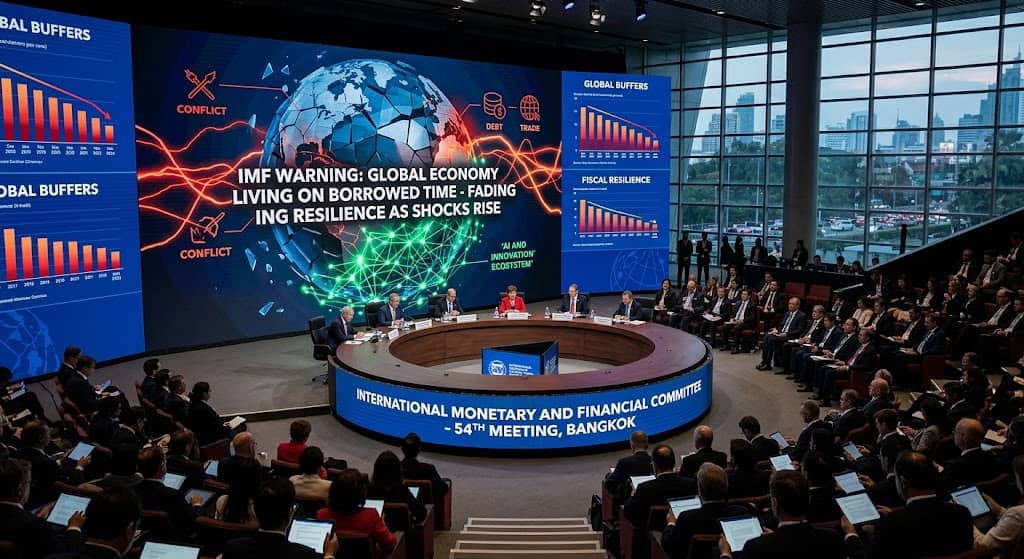
The global economy has absorbed a fresh wave of shocks better than expected—but the International Monetary and Financial Committee is warning that the world’s economic buffers are running dangerously low.

In a statement issued after its 54th meeting in Bangkok, IMFC members said wars, trade tensions and supply-chain disruptions were fuelling uncertainty, raising prices and placing the heaviest burden on low-income countries and fragile states.
Escalating conflicts could further disrupt trade routes, worsen energy and food insecurity, and intensify commodity-price pressures.
Despite the risks, global growth has remained broadly stable. Rapid advances in artificial intelligence are driving investment, expanding trade and offering the potential to lift productivity.
But the committee cautioned that the benefits of technological change must be shared widely, while its economic and financial risks are carefully managed.
High public debt, rising sovereign-bond yields and costly refinancing needs are also threatening financial stability.
Demographic change, extreme weather, natural disasters and growing economic fragmentation are adding to the policy challenges facing governments.
The committee called for urgent action to restore fiscal resilience through credible medium-term plans, while protecting vulnerable communities and safe- guarding investments that support productivity and growth.
Central banks, it said, must remain focused on price stability, communicate clearly and preserve their independence.
Members also backed stronger safeguards for digital finance, greater cyber resilience and intensified efforts to combat digital fraud.
They pledged to reinforce supply chains, protect secure energy flows and uphold freedom of navigation as essential pillars of global economic stability.
For heavily indebted and vulnerable countries, the committee promised continued support, including faster and more predictable debt restructuring.
It urged greater transparency from private creditors and welcomed efforts under the IMF-World Bank Group’s three-pillar approach to assist countries facing short-term financing pressures.
The statement also reaffirmed support for a strong, quota-based and adequately funded IMF at the centre of the global financial safety net.
Members called for domestic approval of the 16th General Review of Quotas without further delay.
The warning from Bangkok was clear: stability has endured, but it cannot be assumed. Ending wars, rebuilding economic buffers and strengthening international cooperation, the committee said, will be essential to securing durable and inclusive growth.