

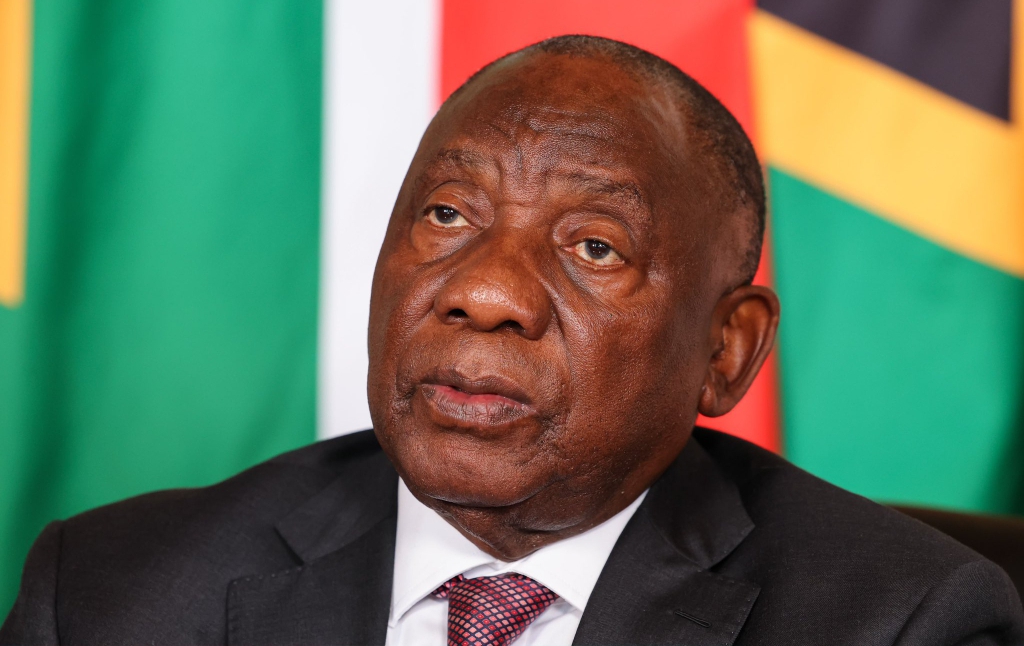
President Cyril Ramaphosa and First Lady Dr Tshepo Motsepe are expected to cast their ballots at the Hyde Park High School in Johannesburg on Wednesday, 4 November 2026, as South Africans vote in the country’s seventh local government elections.

The Presidency said the President had declared Election Day a public holiday across South Africa under Section 2A of the Public Holidays Act of 1994.
The move is intended to give registered voters time to participate in the poll, which determine local representatives responsible for decisions affecting communities’ daily lives.
Ramaphosa has urged citizens to use the holiday to exercise their democratic right and civic duty while he also called on employers to make provision for workers to vote.
The Electoral Commission of South Africa (IEC) has confirmed that voting stations will be open nationally from 7am to 9pm. Voters may cast their ballots only at the voting station in the ward where they are registered.
Those who travel on Election Day will not be able to transfer their votes to another station. Special voting took place on 2 and 3 November for approved voters who could not vote on the main polling day.
In its latest readiness update, issued on 14 Oct, the IEC said 2,655,067 special- vote applications had been approved — a 131% increase compared with 1,147,759 approved for the comparable 2021 election.
The applications included home visits for voters unable to travel because of infirmity or disability, as well as voting-station special votes.
The commission said it had secured all 23,696 voting stations and was preparing to deploy about 188,500 electoral officials.
More than 29 million voters are on the roll, according to government information reported by SAnews. The 2021 local elections recorded a turnout of 45.86%, making participation a major focus of the 2026 campaign.
Local govt elections directly shape the councils and ward representation that oversee services such as water, sanitation, electricity, refuse removal, roads and local development.
Ward councillors are expected to represent residents’ concerns, consult
communities and monitor municipal performance.
The outcome will also influence how
municipalities respond to service-delivery pressures and coalition politics. The IEC has encouraged voters to confirm their voting-station details before polling day.
Voters can use the commission’s online services or send their ID number by WhatsApp to 0600 88 0000.
The commission has also urged citizens to protect the credibility of the election by relying on verified information and participating peacefully.
With the election taking place on a public holiday, the Presidency and the IEC have placed responsibility squarely on eligible citizens to turn out and determine who will represent them in local government for the next term.