

Six months after Ebola was declared in the Democratic Republic of the Congo (DRC), the response built laboratories, treatment beds and a broad network of local health workers.

Yet the outbreak is still moving through communities where conflict makes it
difficult to reach patients, trace their contacts or keep essential services open.
In its six-month update, the World Health Organization (WHO) said more than 11,000 cases and 5,400 deaths had been reported.
Children account for more than a quarter of confirmed cases and a third of deaths. Among children under five with confirmed Ebola, seven in 10 have died.
Even as transmission has slowed in some of the first outbreak centres, 400 to 500 new cases are being reported each week, and the outbreak has reached 67 health zones in eight provinces.
The numbers show an emergency that has not yet turned a corner. The European Centre for Disease Prevention and Control (ECDC), using data through 12 November, put the DRC toll at 11,197 confirmed cases and 5,471 deaths.
It also recorded cases in Kenya and Nigeria, while noting that the outbreak in Uganda had ended.
A disease that is hard to spot early
This outbreak is caused by Bundibugyo virus, one of the viruses that causes Ebola disease. It is not the same virus targeted by the licensed vaccine widely used against the Zaire strain.
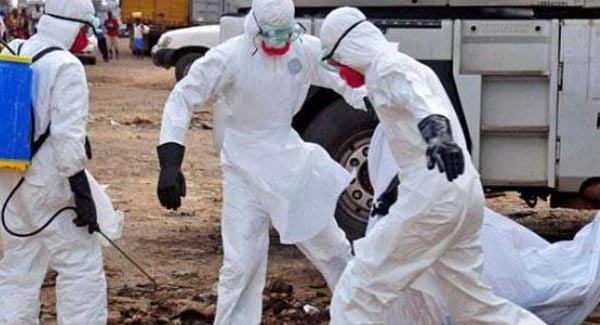
WHO says there are currently no approved vaccines or specific treatments for Bundibugyo virus disease, making rapid diagnosis, isolation, supportive care, contact tracing and safe burials central to controlling spread.
The early signs can be difficult to distinguish from other illnesses common in the region. Fever, fatigue, muscle pain, headache and sore throat may precede more serious symptoms.
People are infectious after symptoms begin, but without timely testing, Ebola
can be missed at first and patients may seek care in places without adequate isolation or infection-control measures. That delay is reflected in where deaths are occurring.
WHO says around two-thirds of
confirmed deaths have taken place in communities rather than treatment centres, a sign that many people are being identified too late to receive specialized care.
Contact tracing also remains below target. The outbreak’s six-month report says that more than 1,000 contacts were lost to follow-up after an armed attack in Cantine-Aloya.
Violence breaks the chain of care
The attack in Cantine-Aloya illustrates how insecurity can undo painstaking public-health work. WHO reported 66 civilian deaths, including three health workers, and said three health facilities were looted.
Three confirmed Ebola cases remained unaccounted for after the attack, and a second assault on the town was reported on 11 November. The agency says there have been more than 80 attacks on health care since the outbreak was declared.
“Health workers and humanitarian teams must be able to reach affected communities safely, and patients must be able to seek care without fear,” Dr Roseline Belizaire, WHO Africa’s head of health emergencies, told Health Policy Watch.
Belizaire warned that violence is driving displacement and increasing the risk of spread, particularly along major
transport routes.
Displacement makes surveillance harder: families move, contacts become difficult to locate, and people may travel to find food or shelter. It can also sever access to routine care.
WHO says affected communities need support that extends beyond Ebola, including food security, clean water and sanitation, maternal and newborn health care, protection for children, and mental-health support.
The challenge is not only getting teams through dangerous areas. Trust and practical access matter too. WHO says community deaths, missed contacts and delays in reaching care point to gaps in the response.
Médecins Sans Frontières (MSF) has separately raised concern that resources mobilized for the response do not always reach patients, frontline workers and communities.
In comments reported by Health Policy Watch, MSF president Dr Javid Abdelmoneim said: “Despite the vast amounts of money provided for the response, many frontline responders are left trying to contain the outbreak with empty hands and empty pockets.”
Progress to protect—and extend
There are measurable gains. WHO says transmission has been halted in several early epicentres, including Mongbwalu, Nyankunde, Nizi, Rwampara and Butembo.
Diagnostic capacity has grown from two laboratories to more than two dozen, and nearly 2,000 treatment beds are available in 104 treatment and transit centres.
About 3,000 people have recovered. More than 17,000 community health workers and 46,000 community actors have been trained, while nearly 90 percent of registered deaths are now managed with safe and dignified burials.
Those figures describe the infrastructure of response, not a guarantee of control. The WHO says its partners supporting health services in affected areas, include treatment for acute malnutrition, while local teams work to keep maternal health services operating.
But progress in one town can remain fragile if insecurity pushes people away from care or prevents teams from following up with contacts. Research may add new tools, though it is not an immediate substitute for access to care.
On 4 November, WHO announced that expert groups had recommended adding two candidate vaccines—ChAdOx1 and Moderna’s mRNA-1469—to the Tumaini clinical trial in the DRC, subject to national approvals.
The trial uses a ring-vaccination approach, offering vaccination to contacts of confirmed cases.
Separate studies are evaluating possible treatments, including the monoclonal antibody MBP134 and the antiviral remdesivir.
WHO Director-General Tedros Adhanom Ghebreyesus cautioned against seeing vaccines as a stand-alone solution: “Vaccines alone won’t end this outbreak, but they could become a powerful new tool for bringing it under control.”
That distinction matters. Candidate vaccines must be studied, and any eventual impact depends on getting them to people at risk.
Meanwhile, proven outbreak measures still rely on the basics: finding cases quickly, providing safe treatment, tracing contacts, supporting families and protecting health workers.
The next six months
The immediate test is whether response teams can reach the communities most isolated by conflict and displacement—and whether residents can access care without fear or prohibitive barriers.
WHO is calling for a halt to hostilities, protection for health care and sustained, flexible funding through 2027. It also says affected communities must help shape the response and receive support for needs that the Ebola emergency has intensified.
Six months of work have slowed transmission in some places and expanded the capacity to respond.
But the persistent toll, the number of community deaths and the continuing
weekly flow of new cases show how much remains undone. Ending outbreak will depend not only on medical capacity, but on whether that capacity can safely reach people in time.