

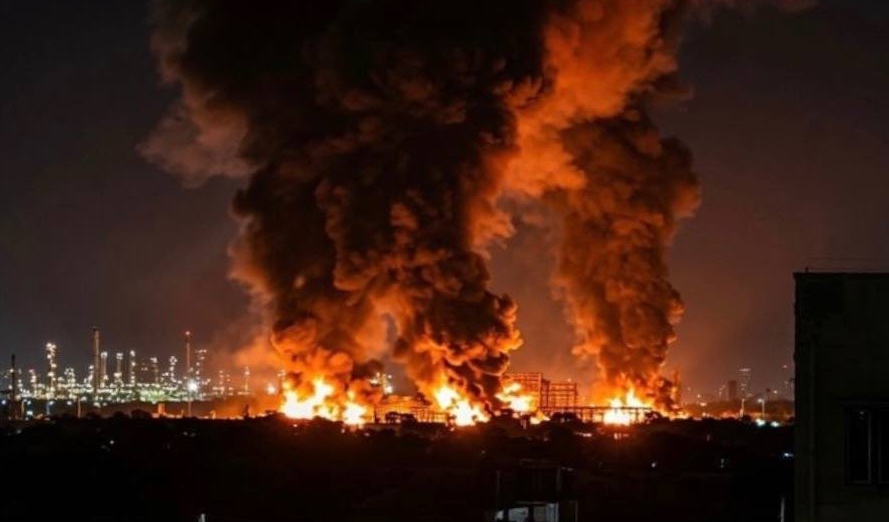
A series of high-intensity US-Israeli airstrikes has left Mehrabad International Airport and several other key Iranian airbases in ruins, marking one of the most significant military escalations in the 39-day conflict.
The operation, dubbed “Operation Roaring Lion” by the Israeli Defense Forces (IDF), specifically targeted the heart of Iran’s military transport and leadership logistics, resulting in the destruction of dozens of aircraft and the deaths of senior military officials.
Surgical Strikes on Military Infrastructure
The overnight operation on April 6-7, 2026, involved dozens of Israeli Air Force (IAF) fighter jets targeting three primary airports in Tehran province: Mehrabad International Airport, Bahram Airport, and Azmayesh Airport.

Target Location
Mehrabad Airport Central hub for IRGC Quds Force; used for arming and financing regional proxies. Multiple intense bombardments reported.
Bahram Airport: Military airfield targeted to wear down the Iranian Air Force capabilities. Azmayesh Airport Strategic airstrip hit to further degrade the regime’s aerial response capacity.
Urmia & Khoy Airports: Targeted in West Azerbaijan Province, expanding the strike zone to northwestern Iran and Kashan Airport Reported strikes in Isfahan Province, targeting central Iranian infrastructure. The IDF confirmed the destruction of “dozens of Iranian aircraft,” including fighter jets, helicopters, and transport planes used by the Islamic Revolutionary Guard Corps (IRGC).
Notably, reports indicate that aircraft specifically used for the official transport of senior Islamic Republic officials were among those destroyed at Mehrabad.
High-Value Targets and Casualties
The strikes were not limited to hardware. The IDF confirmed the elimination of senior IRGC Quds Force (IRGC-QF) officials during the operation: • Kamil Melhem: Artillery commander of the Imam Hussein Division. He was responsible for overseeing artillery launches against Israel and weapons procurement.
• Senior Aides: Several high-ranking aides to Division Commander Yahya Hussein were also killed in the same strike and Maj. Gen. Majid Khademi: Iran reported that an Israeli strike at dawn killed the IRGC’s intelligence chief.
Humanitarian and Civilian Impact
While the primary targets were military, the proximity of Mehrabad Airport to residential areas in western Tehran led to significant collateral damage.Residential Neighborhoods: Explosions and fires were reported in Tehranpars, Saadat Abad, and Molavi neighborhood. A residential building in northern Tehran was hit, causing multiple injuries.
Infrastructure Damage: A power facility along the Hakim Highway was damaged, and a branch of Iran’s National Bank was struck 2 .
Academic Impact: Strikes hit the area near Shahid Beheshti University, with total damage to academic infrastructure estimated at over IRR 4 trillion ($95 million).Nuclear Safety Concerns: The IAEA has warned that strikes near the Bushehr atomic power plant pose a “very real danger to nuclear safety”.
Strategic Context: The “Hormuz Deadline”
These strikes occur against the backdrop of a severe diplomatic crisis. United States President Donald Trump has issued a deadline for the reopening of the Strait of Hormuz, threatening “complete demolition” of Iran’s key infrastructure if the waterway remains blocked.
Iran has dismissed these threats as “delusional,” insisting on a 10-point proposal for a permanent end to the war and the lifting of all sanctions.
The systematic targeting of airports like Mehrabad, which serves as both a domestic hub and a military stronghold, appears designed to paralyze the Iranian regime’s ability to move personnel and equipment, effectively grounding its leadership while the U.S. and Israel
intensify their “Operation Roaring Lion”.