

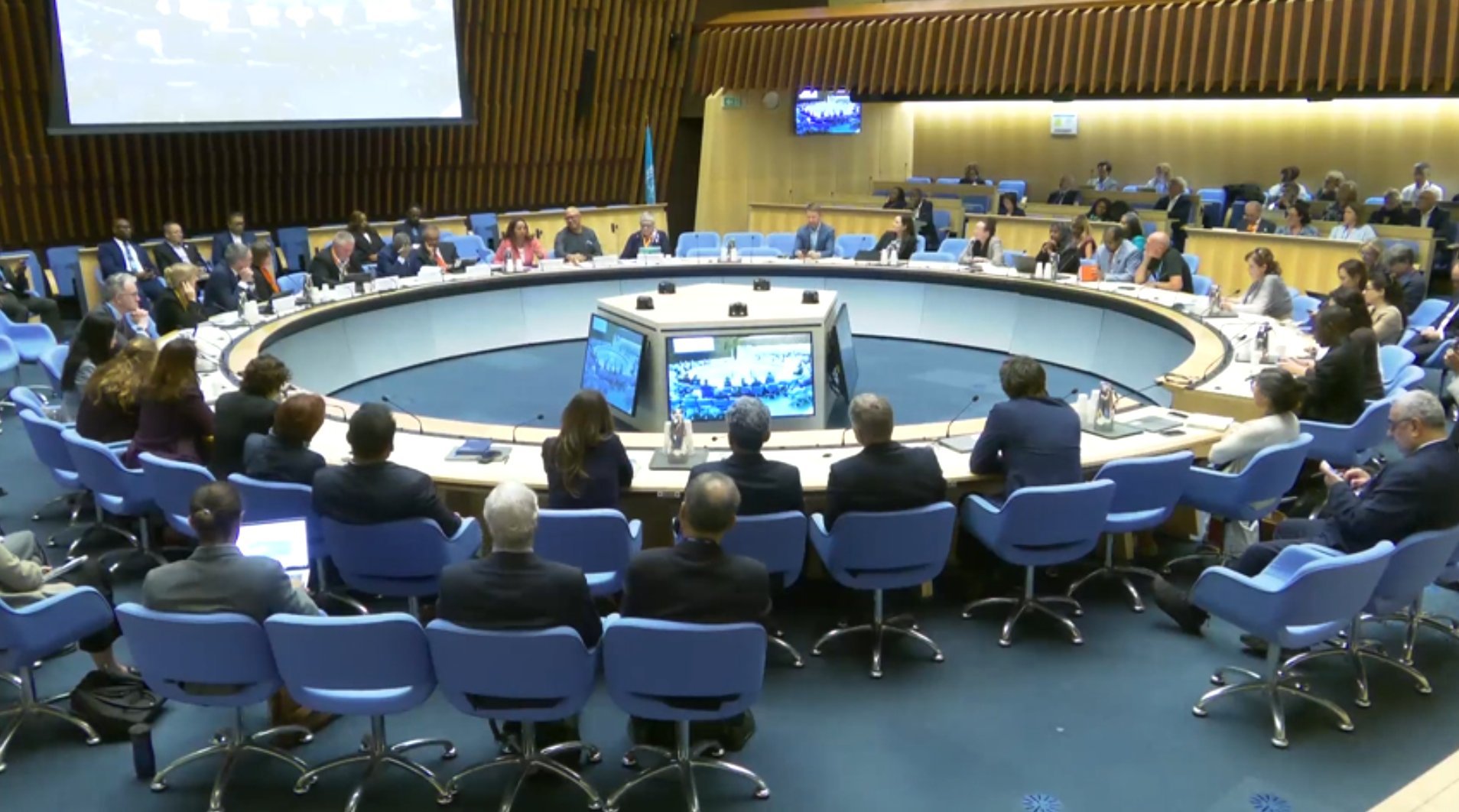
In a pivotal address to Member States at the 79th World Health Assembly WHA79, the Director- General of the World Health Organization (WHO), Tedro Ghebreyesus delivered a stark assessment of current global health challenges.
He highlighted urgent responses to new outbreaks while celebrating significant strides in public health.
The speech underscored the critical role of international cooperation and the WHO’s unwavering commitment to
promoting, providing, and protecting health worldwide.

Ebola Emergency Declared Amidst Rising Concerns
Just days before the Assembly, the Director-General declared a Public Health Emergency of the International Concern (PHEIC) over escalating Ebola epidemic in the Democratic Republic of the Congo (DRC) and Uganda.
This unprecedented declaration, made prior to convening an Emergency Committee, reflects deep concerns over the scale and speed of the outbreak.
With 30 confirmed cases in DRC’s Ituri province and two in Uganda’s capital,
Kampala (including one fatality), the situation is dire. An American national also tested positive and was transferred to Germany.  The WHO is collaborating closely with the affected nations and the United States to contain the spread.
Several factors amplify the alarm: over 500 suspected cases and 130 suspected deaths beyond confirmed figures, cases emerging in urban centers like Kampala and Goma.
Healthcare-associated transmission indicated by health worker deaths, and significant population movement in the insecure, conflict-ridden Ituri province—a mining zone. Compounding these challenges, the epidemic is caused by the Bundibugyo virus, for which no vaccines or therapeutics currently exist.
The Director-General commended Uganda for postponing its annual Martyrs’ Day celebrations, which typically draw millions, to mitigate transmission risks.
The WHO has deployed substantial resources, including personnel, supplies, equipment, and an additional US$3.4 million from the Contingency Fund for Emergencies, bringing the total to US$3.9 million.
Hantavirus Outbreak on MV Hondius Contained
Simultaneously, the WHO has been managing a hantavirus outbreak among passengers and crew of the MV Hondius cruise ship. All passengers have been repatriated and are under monitoring until June 21st, while the crew, disembarked in Rotterdam, will remain quarantined until June 29th.
The Director-General praised Captain Jan Dobrogowski of Poland for his exemplary leadership during the crisis. The global risk of hantavirus remains low, with 11 reported cases and 3 deaths, and no new fatalities since May 2nd.
The WHO’s assessment indicates no signs of a larger outbreak, though vigilance is urged.
Spain, South Africa, the United Kingdom, Cabo Verde, the Netherlands, Argentina, and Chile were recognized for their swift responses, demonstrating adherence to Int’l Health Regulations and moral duties.Promoting Health and Preventing Disease: Key Achievements
The address also detailed the WHO’s achievements in promoting health and preventing disease, aligning with the 14th General Programme of Work.
This year marks the 40th anniversary of the Ottawa Charter, a foundational declaration emphasizing health creation
in daily environments.
Six key areas of progress were highlighted: Tobacco Control: The WHO Framework Convention on Tobacco Control (FCTC) celebrated its 20th anniversary, with global tobacco use dropping by one-third.
Maldives and the United Kingdom implemented generational tobacco bans, and Zambia approved a comprehensive tobacco control bill. However, the rise of new nicotine products like e-cigarettes and nicotine pouches presents new challenges.Health Taxes: The WHO’s “3 by 35” Initiative encourages countries to raise taxes on tobacco, alcohol, and sugary drinks, with India, Jamaica, Malaysia, and others making progress.
Nutrition: Progress in exclusive breastfeeding (almost 50% of children globally) and childhood overweight, with 146 Member protecting breastfeeding. Obesity rates are plateauing in some high-income countries, and Portugal and the UAE eliminated trans fat.
Climate and Environment: The WHO Alliance for Transformative Action on Climate and Health grew to over 100 countries. An updated Global Road Map on Air Pollution and Health aims to halve health impacts by 2040. One billion more people now have access to safely managed drinking water.
Violence, Injuries, and Drowning: 68 countries reported progress on violence against children. The first Global Strategy for Drowning Prevention targets a 35% reduction in deaths by 2030. Road safety legislation was strengthened in 15 countries.Cities: Nearly 140 cities joined regional healthy cities networks, improving food safety, housing, and indoor air quality through the Urban Health Capacities Assessment and Response Resource Kit.
Providing Health: Strengthening Systems and Addressing Threats
The WHO is also bolstering health systems and primary healthcare towards universal health coverage, focusing on four areas:
Health Financing: Guidance was developed to respond to health financing
emergencies following cuts to official development assistance, supporting countries like Cambodia and Ethiopia. The UHC Knowledge Hub in Tokyo was established to aid capacity-building and knowledge sharing.
Health Workforce: Addressing a projected shortage of 11 million health workers by 2030, the WHO supported 11 countries in strengthening national workforce strategies, contributing to nearly 100,000 new health worker jobs. The WHO Academy in Lyon offers over 400 free courses in 23 languages, with 120,000 enrolments.Health Products: The WHO prequalified 50 medicines, 6 vaccines, and numerous
diagnostics and medical devices.
The Essential Medicines List was updated to include new cancer medicines and GLP-1s for diabetes.
Regulatory agencies in Australia, Canada, Indonesia, Japan, and the UK were designated as WHO Listed Authorities. Regional training centers for biomanufacturing were established in seven countries.
The Global Antimicrobial Resistance and Use Surveillance System (GLASS) revealed that 1 in 6 bacterial infections are now antibiotic-resistant.
The Traditional Medicine Global
Library was launched with almost 2 million scientific records.Health Data Systems and Digital Technologies: The Global Digital Health Certification Network expanded to 82 countries, enabling 2 billion people to access health records. ICD-11 has been rolled out to 132 Member States, processing 4 million daily requests for
health trend analysis.
Furthermore, the WHO is addressing specific health threats in five areas:
Maternal and Child Mortality: Updated estimates and consolidated guidelines on postpartum hemorrhage are saving lives.
New global estimates show 4.9 million
children died before their fifth birthday in 2024, a significant reduction from 30 years ago but still a global health priority.
Vaccine-Preventable Disease: The Big Catch-Up initiative delivered over 100 million vaccine doses to 18.3 million children. Malaria vaccines introduced in seven new countries, HPV vaccination in 15 more. Research reaffirmed that vaccines do not cause autism.
Disease Elimination: 17 countries eliminated seven diseases, including trachoma (Algeria, Australia, Burundi, Egypt, Fiji, Libya, Senegal, Tunisia), sleeping sickness (Kenya), and leprosy (Chile). Several countries eliminated mother-to-child transmission of HIV, hepatitis B, or syphilis, with Maldives achieving triple elimination.Communicable Diseases: On HIV, the WHO took an aggressive approach to HIV prevention and treatment, recognizing the continued global burden of the disease. (Note: The provided source material was truncated at this point,
so further details on communicable diseases are not available.)
International Threats Demand International Response
The Director-General concluded by reiterating that the recent outbreaks of Ebola and hantavirus serve as powerful reminders of why international health threats necessitate a coordinated international response.
He emphasized the indispensable role of the International Health Regulations and the WHO itself in safeguarding global health security.
Despite the challenges, the past year has seen numerous achievements, comprehensively detailed in the WHO Results Report, which showcases the organization’s impact on the ground.
This address at the 79th World Health Assembly painted a comprehensive picture of world grappling with persistent and emerging health crises, yet making significant progress through dedicated efforts and global collaboration.