

African nations have called on the International Monetary Fund to put the widening gap between resilient advanced economies and financially constrained emerging and low income countries at the centre of its surveillance, policy advice and lending.

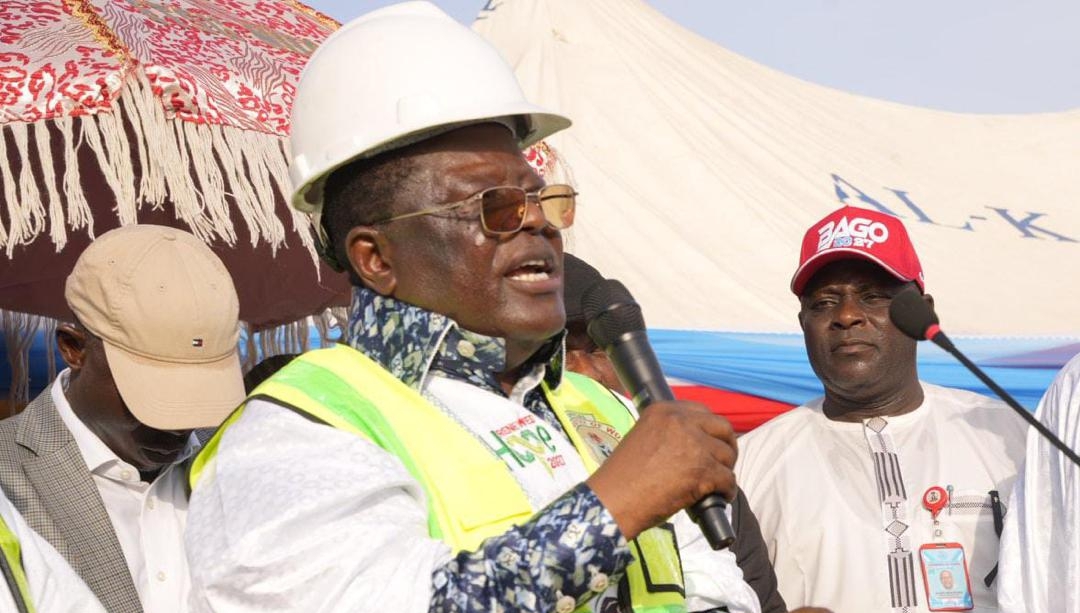
The call was made by Nigeria’s Minister of Finance and Coordinating Minister of the Economy, Taiwo Oyedele, in a statement to the 54th meeting of the IMF’s International Monetary and Financial Committee.
Oyedele spoke on behalf of the IMF Africa West Constituency, representing Benin, Burkina Faso, Côte d’Ivoire, The Gambia, Guinea, Guinea-Bissau, Liberia, Mali, Mauritania, Niger, Nigeria, Senegal, Sierra Leone and Togo.
The constituency said the global economy’s apparent resilience concealed a growing divergence that was placing the heaviest burden on emerging market and developing economies (EMDEs), particularly low-income countries and fragile states.
According to the statement, global growth is projected at 3.1% in 2026, while growth in EMDEs is expected to slow to 3.7%.
The delegation warned that countries outside the technology and artificial- intelligence investment cycle—especially energy importers—were facing rising import bills, exchange-rate pressure and shrinking fiscal space.
Repeated external shocks and declining support from abroad, it said, risk worsening poverty and food insecurity.
The constituency urged the IMF to give greater weight in its World Economic Outlook to the distributional effects of technology-led growth and to ensure that its next baseline update fully reflects the impact of the war in the Middle East on vulnerable economies.
Debt and financing pressures
The representatives identified high interest rates, expensive borrowing and refinancing risks as central threats to economic stability across poorer countries.
Although global financial conditions remain broadly supportive, they warned that stretched asset valuations, high public debt and increased financial interconnectedness could leave markets exposed to abrupt repricing, higher yields, wider spreads and capital outflows.
The statement cited projections that public debt in EMDEs could rise from 74% of gross domestic product to 84% by 2031.
At the same time, falling official development assistance is increasing pressure on national budgets and crowding out development and social
spending.
The constituency backed stronger medium-term fiscal and debt- management frameworks, longer debt maturities, broader investor bases and larger financial buffers.
It also supported exchange-rate flexibility where appropriate and a pragmatic application of the IMF’s Integrated Policy Framework.
It called for greater transparency and proportionate, risk- based regulation of innovative debt instruments, including total-return swaps.
But the delegation stressed that the most urgent requirement was timely IMF financing and adequate concessional resources through the Poverty Reduction and Growth Trust and the Resilience and Sustainability Trust.
Subsidy reform and social protection
The statement acknowledged the difficult policy trade-offs governments face when trying to shield households from supply shocks, contain inflation and preserve fiscal sustainability. Those tensions are particularly acute in countries with limited fiscal room and weak administrative capacity.
The constituency welcomed the IMF’s finding that targeted and temporary income support can protect vulnerable households more effectively and at lower cost than broad price-suppression measures.
However, it cautioned that many governments still depend on subsidies and price controls because they lack the systems needed to deliver targeted
assistance.
Removing those measures without adequate safety nets, it warned, could cause serious social hardship.
The IMF was therefore urged to tailor its advice to the pace of subsidy reform and expand support for social-protection systems, working closely with the World Bank and other development partners.
The delegation also called for practical guidance on domestic revenue mobilisation, tax incentives and international tax cooperation, including measures to prevent tax avoidance.
Tax reform and fiscal space
Well-designed tax reform was described as essential to rebuilding fiscal space in subSaharan Africa, but the constituency said reforms must be growth-friendly, carefully sequenced and supported by long-term financing and institutional capacity.
Rather than simply increasing tax burdens, the IMF’s Fiscal Monitor should help countries make existing tax systems more efficient, the statement said.
Better-designed value-added taxes, fewer inefficient exemptions, better-targeted incentives and stronger tax administration could produce gains in both economic output and household welfare.
The representatives pointed to revenue -administration reforms in Nigeria and advances in domestic revenue mobilisation and public financial management in Côte d’Ivoire as examples of the benefits of sustained, well-sequenced reform.
They nevertheless stressed that taxation alone could not close the region’s development-financing gap and urged the IMF and development partners to expand capacity-building and access to long-term finance that can attract private investment.
Financial stability and digital risks
The growing role of non-bank financial institutions—including hedge funds and other highly leveraged entities—also drew concern.
The constituency warned that crowded trades, derivatives exposure and reliance on short-term funding could amplify market stress and transmit shocks to emerging markets.
It supported efforts to close data gaps, strengthen system-wide stress testing and improve international supervisory cooperation.
Assessments of private credit and private equity, it said, should distinguish structural vulnerabilities from long-term investment strategies and examine funding structures, liabilities and risk-bearing capacity.
The delegation took a cautious position on tokenisation, saying its potential efficiency and transparency gains remained insufficiently established.
Any wider adoption should follow sound legal and regulatory frameworks, strong governance, adequate supervisory capacity and careful evaluation of pilot projects.
AI opportunity and digital divide
The statement welcomed the possibility that artificial intelligence could raise productivity in sub-Saharan Africa by as much as 4% over the next decade.
But it warned that this opportunity would not be realised without major investment in digital infrastructure, reliable and affordable energy, education and skills.
The constituency said the danger of a widening digital divide must be treated as a central policy concern.
It called for stronger regional cooperation on skills development, labour mobility, digital infrastructure and knowledge- sharing, alongside national efforts to improve the business environment, deepen financial markets and expand access to finance for small and medium-sized enterprises.
Governments should also establish proportionate rules for data, competition and AI that encourage innovation while managing risks.
The IMF was urged to incorporate the
macroeconomic effects of digitalisation and AI into its surveillance and capacity development work, including their implications for jobs, public finances and structural transformation.
The statement further called for cooperation with the World Bank, regional development banks and the private sector to reduce risks associated with investment in digital and energy infrastructure, support technology transfer and help vulnerable economies participate in emerging value chains.
Trade fragmentation and debt resolution
The constituency warned that persistent global imbalances, rising trade restrictions and distortive industrial policies could trigger disorderly movements in exchange rates, capital
flows and interest rates.
Commodity-dependent and small open economies would bear disproportionate costs through weaker export demand, volatile commodity prices, reduced market access and higher financing expenses.
Imbalances should be addressed through domestic macroeconomic and structural policies rather than tariffs and inward-looking measures that shift the burden onto other countries, the statement said.
It called for transparent and predictable trade frameworks, continued market access and support for regional integration, including the African Continental Free Trade Area.
Debt vulnerabilities were described as a major constraint on growth and development, especially in sub-Saharan Africa.
Rising debt-service costs, climate disasters, food and energy shocks, insecurity, currency pressures and declining aid are crowding out spending
on infrastructure, health, education and social protection, the constituency said.
It urged faster and more predictable debt restructuring, closer creditor coordination and clearer timelines under initiatives including the G20 Common Framework and the Global Sovereign Debt Roundtable.
The IMF was also asked to ensure that its revised debtsustainability framework for low-income countries properly accounts for the long-term growth benefits of climate and development investment.
Call for a stronger IMF
The statement concluded with a call for a strong, quota-based and adequately resourced IMF at the centre of the global financial safety net.
The constituency supported full implementation of the IMF’s 16th General Review of Quotas and meaningful progress towards a quota realignment under the 17th review that better reflects members’ economic positions while protecting the voice of the poorest countries.
It also stressed the importance of securing the long-term sustainability of the Poverty Reduction and Growth Trust and ensuring adequate subsidy resources for countries with limited access to other safety nets.
While welcoming recent IMF reviews focused on tailored advice, realism, country ownership and more selective conditionality, the representatives cautioned that risk-based surveillance should not impose additional burdens on low-capacity members.
Capacity development, they said, must be properly funded and integrated with surveillance and lending programmes. The delegation ultimately argued that global resilience should not lead to complacency.
For countries facing higher borrowing costs, weaker external support, climate shocks, food insecurity and conflict, it said, international cooperation and burden-sharing are essential to preserve hard-won gains and create room for sustainable development.