

The Federal Government has commenced the reconstruction and dualisation of the 401-kilometre Lambata–Bida–Mokwa–Makera–Kontagora highway in Niger State, a project officials say will strengthen regional connectivity, improve trade and boost economic activity across the North-Central zone.

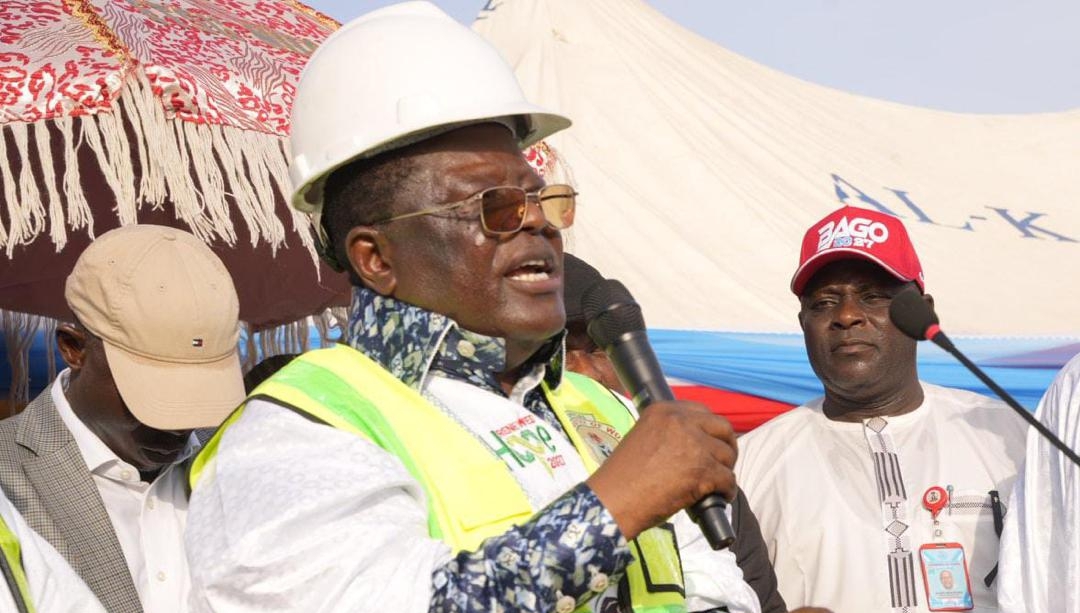
The flag-off ceremony took place in Bida on Tuesday, October 13, 2026, with Niger State Governor Mohammed Umaru Bago performing the ceremony on behalf of President Bola Ahmed Tinubu.
The highway is a key transport corridor linking communities and commercial centres across Niger State.
It is expected to ease the movement of people, agricultural produce and other goods between northern and southern parts of the country, while improving access to markets and services for communities along the route.
Governor Bago described the project as a major milestone for Niger State and motorists who depend on the route.
He thanked the President for what he called an ambitious approach to infrastructure development and pledged to mobilise political support for Tinubu and the ruling party in future elections.
The Minister of Works, David Umahi, said the project formed part of the Federal Government’s wider infrastructure programme. He said the removal of fuel subsidy had created fiscal space for increased investment in roads and other infrastructure.

According to Umahi, approximately 5,500 kilometres of roads have been initiated across the North-Central zone, with more than 1,000 kilometres located in Niger State.
He said the Lambata–Bida–Mokwa –Makera–Kontagora project would be financed by the Dangote Group under the Federal Government’s tax-credit financing model.
The minister also announced that the road would be constructed using continuously reinforced concrete pavement, or CRCP, a technology officials described as durable and better suited to withstand heavy traffic and challenging weather conditions.
Umahi said the approach would provide a long-term solution to recurring road failures and reduce the need for frequent repairs.
The Minister of State for Works, Bello Muhammad Goronyo, said the project would complement an emergency intervention on the failed Dikko Junction–Maje road.
He said President Tinubu had approved immediate palliative works on the seven-kilometre corridor following a recent assessment visit, addressing a problem that had affected motorists and host communities for about a decade.
The Minister of Information and National Orientation, Mohammed Idris, said the Federal Government’s infrastructure drive was linked to its broader economic reform and agricultural transformation agenda.
He said improved roads would support economic recovery by strengthening the movement of farm produce and expanding opportunities in rural communities.
Legislators also welcomed the project. The Chairman of the Senate Committee on Works, Senator Allwell Onyesoh, described it as part of a deliberate national infrastructure policy.
The Chairman of the House of Representatives Committee on Works, Akin Alabi, said the highway was an important link between northern and southern Nigeria and pledged legislative oversight to support its delivery.
Providing technical details, the Director of Highways, Construction and Rehabilitation, David Yiltong, said the contract would run from Lambata through Bida, Mokwa and Makera before terminating at Kontagora.
He said the dualisation works would improve security, reduce travel difficulties and facilitate access to agricultural areas and commercial centres.
The project has an estimated cost of ₦1.83 trillion. Officials said its expected benefits include job creation, improved security, expanded commercial activity and stronger links between Niger State and neighbouring regions.
Representing the Dangote Group, Mansur Ahmed reaffirmed the company’s commitment to infrastructure development and said the road investment would open up new communities and stimulate employment and business activity.
He said the company expected the project to be completed within the stipulated timeframe and estimated Dangote’s overall investment in Nigeria’s road sector at more than ₦5 trillion.
Ahmed also referenced the group’s ongoing establishment of a rice mill in Wushishi and other development projects in Niger State.
Traditional rulers and state officials expressed support for the initiative. The Etsu Nupe and Chairman of the Niger State Traditional Council, Yahaya Abubakar, said the road would improve transportation, strengthen local economies and enhance the welfare of communities along the route.
The Secretary to the Niger State Government, Abubakar Usman, said the project would expand the state’s economic advantages by improving trade routes and supporting the movement of agricultural products.
The Senior Special Assistant to the President on Community Engagement for the North-Central zone, Abiodun Essiet, called for sustained cooperation among the Federal Government, the state government, private-sector partners and local communities.
While the project is expected to deliver significant economic and social benefits, its success will depend on effective implementation, reliable funding, compliance with construction standards and adherence to the approved timeline.