

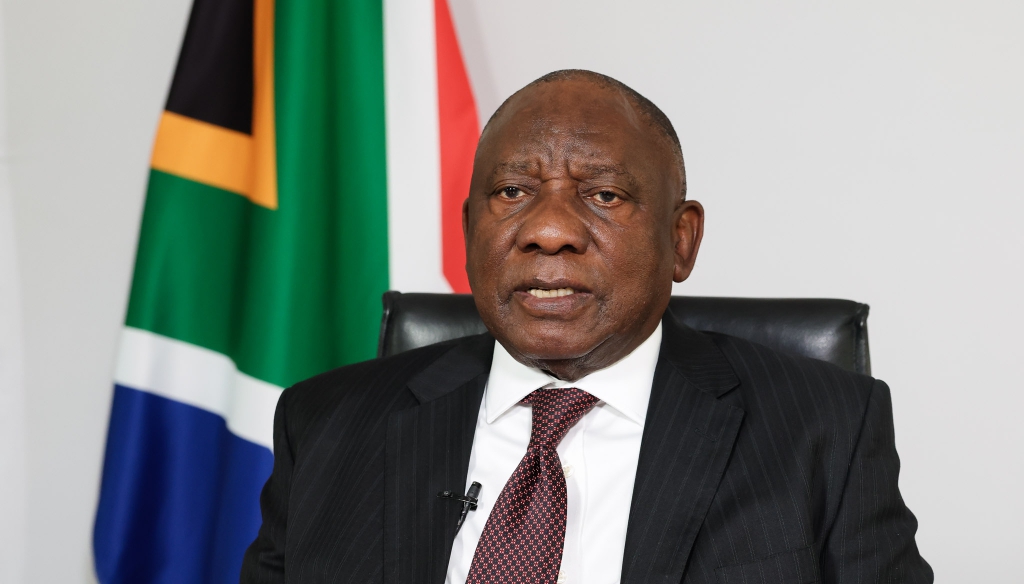
President Cyril Ramaphosa has called on South African businesses to rethink recruitment practices and give young people opportunities to enter the workforce, warning that youth unemployment is threatening the country’s economic future.

Speaking at the SA Youth National Leadership Convening on Thursday, Ramaphosa said employers should stop treating a lack of experience as a lack of ability.
“Let us recognise potential, aptitude, determination and the willingness to learn,” he said. “Let us create more opportunities for young people to enter workplaces, develop their skills and demonstrate what they can do.”
Ramaphosa said the government, business, educational institutions, labour and civil society must treat youth employment as a shared national responsibility.
Government, he said, must create conditions that encourage investment and job creation, while companies must expand productive activity and open their workplaces to young people.
He acknowledged that existing interventions, including the Presidential Youth Employment Intervention, the SA Youth Pathways Network and the Youth Employment Service, had helped connect young people with opportunities.
However, he said temporary placements and public employment programmes must lead to sustainable livelihoods, further training, entrepreneurship or permanent work.
“Our objective cannot simply be to place young people in temporary programmes,” Ramaphosa said. “It must be to create pathways into sustainable livelihoods.”
The president also called for closer links between education and the labour market.
He said reforms to Sector Education and Training Authorities and technical and vocational education and training colleges should ensure that young people acquire skills demanded by industry.
South Africa needs more artisans, technicians, builders, electricians, mechanics and agricultural specialists, he said, adding that vocational and technical careers must be treated as attractive and rewarding alternatives to university education.
Ramaphosa further urged government and established businesses to support young entrepreneurs through access to finance, procurement opportunities, markets, mentoring and business networks.
He said companies could help youth-owned enterprises not only through grants, but by offering contracts and opportunities to become part of their value chains.
“A young entrepreneur does not always need a grant,” he said. “Sometimes what that entrepreneur needs most is a customer. A contract. A market.”
The president identified tourism, agriculture, infrastructure, manufacturing, digital services, the green economy and creative industries as sectors with significant potential to generate youth employment and new businesses.
He said the Work SA Youth Implementation Plan provided a framework for coordinating efforts, but warned that plans would have little value without measurable action.
“We must therefore move beyond the formulation of strategies and the announcement of commitments,” Ramaphosa said. “We must make implementation the defining feature of this partnership.”
He challenged business leaders, industry associations, training institutions and government departments to set clear responsibilities, make practical commitments and regularly assess whether those commitments were being met.
“The future of our young people cannot wait,” Ramaphosa said. “And the future of our country cannot wait.”