
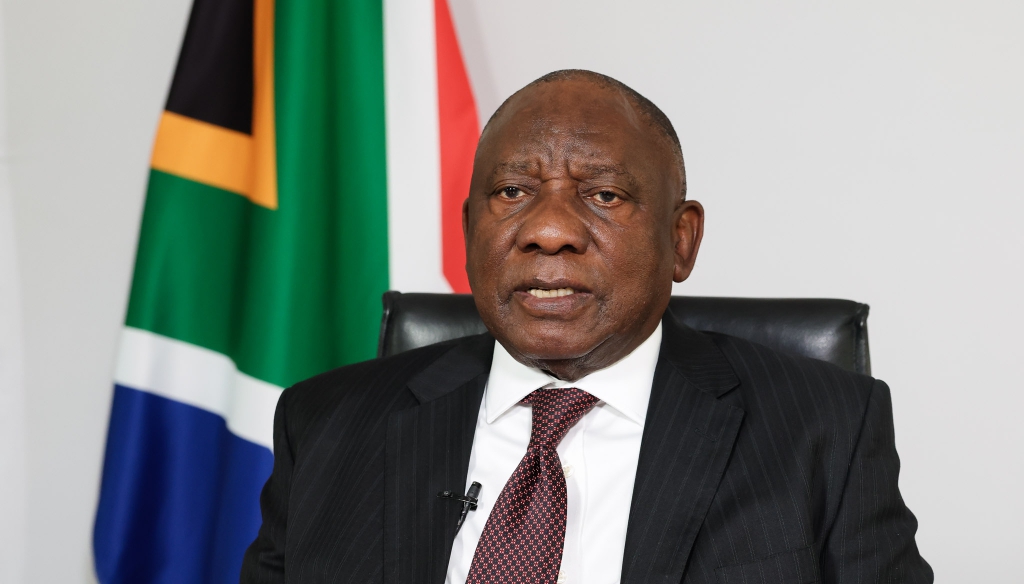
President Cyril Ramaphosa has urged South Africa’s newly elected councillors to put communities ahead of political power struggles, warning that voters expect urgent improvements in basic services.

Addressing the announcement of the 2026 Local Government Election results at the IEC Results Operations Centre in Midrand on Sunday, Ramaphosa said the election had demonstrated the “strength and enduring” character of South Africa’s democracy.
More than 14.9 million people cast ballots in the election, producing a national turnout of 52%—up from 45.9% in 2021.
The results left 127 of the country’s 213 municipalities without an outright majority, creating a strong possibility of coalition or minority administrations.
Ramaphosa said the absence of outright majorities should not be treated as a weakness. Instead, he described it as a clear instruction from voters for political parties to cooperate.
“This is not a weakness of democracy,” he said. “It is an expression of the choices that the people have made.”
He warned parties against turning negotiations to form municipal governments into battles over positions and privileges.
Councils, he said, must be constituted without delay so that budgets can be passed and administrations can begin delivering services.
“The people did not cast their votes so that their representatives could spend the next five years fighting among themselves,” Ramaphosa said. “They voted because they expect their lives to improve.”
The President said those expectations were grounded in the daily realities of South Africans facing a high cost of living, unemployment and unreliable municipal services.
“Communities want water from their taps, dependable electricity, refuse collection, maintained parks and safer streets, he said.
“Our people do not judge government only by the promises that are made or the policies that are adopted,” Ramaphosa said. “They judge government by what changes in their daily lives.”
The African National Congress remained the largest party nationally, winning 30.89% of the vote and 3,164 council seats. The Democratic Alliance followed with 24.60% and 1,527 seats, while the uMkhonto weSizwe Party, Economic Freedom Fighters and ActionSA completed the top five.
But the fragmented outcome means parties will have to negotiate across much of the country. Ramaphosa called on political leaders to approach those negotiations with “maturity, humility and a genuine commitment to the public good.”
He also told incoming councillors that winning office was only the beginning. Their real responsibility, he said, was to listen to residents, act with integrity and place the interests of communities above personal ambition.
“The election is now over,” Ramaphosa said. “The work of serving the people must begin.”
The President closed by saying that voters had spoken and that their verdict must be respected. The responsibility now rests with elected representatives to prove themselves worthy of the public’s trust by making local government work for every South African.