


More than ten days into the latest escalation of conflict in the Middle East, health systems across the region are facing immense strain.
The conflict has led to a surge in injuries and displacement, a continuation of attacks on healthcare facilities, and a significant increase in public health risks.National health authorities have reported substantial casualties.
In Iran, over 1300 deaths and 9000 injuries have been recorded, while Lebanon reports at least 570 deaths and more than 1400 injuries, also Israeli have reported 15 deaths and 2142 injuries.

The conflict is directly impacting essential life-saving services. The World Health Organization (WHO) has verified 18 attacks on healthcare in Iran since February 28, resulting in 8 deaths among health workers.
During the same period in Lebanon, about 25 attacks on healthcare have led to 16 deaths and 29 injuries. These attacks not only claim lives but deprive communities of critical medical care when it is most needed.
The International humanitarian law mandates the protection of health workers, patients, and health facilities at all times. Beyond immediate casualties, the conflict is generating widespread public health concerns.  Current estimates indicate that over 100,000 people in Iran have been internally displaced due to insecurity, and up to 700,000 people in Lebanon have relocated to crowded collective shelters.
These deteriorating conditions, coupled with limited access to the safe water, sanitation, and hygiene, heighten the risk of respiratory infections, diarrhoeal diseases, and other communicable illnesses, particularly among vulnerable populations such as women and children.
Environmental hazards are also a growing concern. In Iran, petroleum fires and smoke from damaged infrastructure have exposed nearby communities to toxic pollutants, potentially causing respiratory problems, eye and skin irritation, and contaminating water and food sources. Access to health services is becoming increasingly restricted across several countries. In Lebanon, 49 primary health care centers and five hospitals have closed following evacuation orders from Israel’s military, reducing the availability of essential services as medical needs escalate.
In the occupied Palestinian territory, increased movement restrictions and checkpoint closures are delaying ambulance and mobile clinic access across various governorates in the West Bank.
In Gaza, medical evacuations have been suspended since February 28, and hospitals continue to operate under severe strain due to ongoing shortages of medicines, medical supplies, and fuel. Fuel is being rationed to prioritize essential health services, including emergency and trauma care, maternal and neonatal services, and the management of communicable diseases.
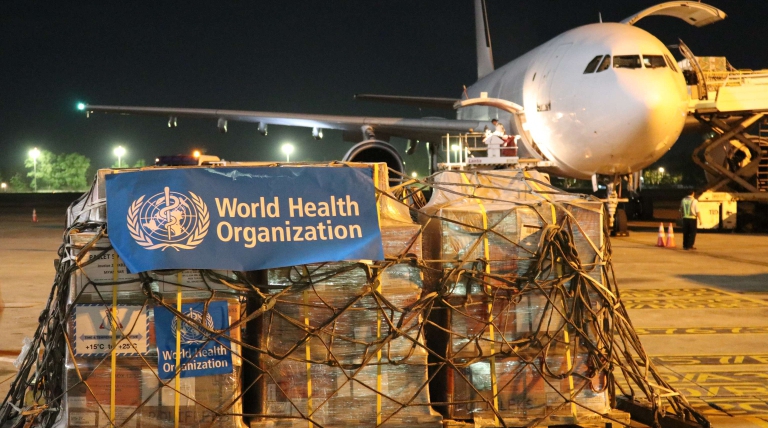
Temporary airspace restrictions have disrupted the movement of medical supplies from WHO’s global logistics hub in Dubai. More than 50 emergency supply requests, intended to benefit over 1.5 million people across 25 countries, are affected, leading to significant backlogs.
Priority shipments include supplies for Al Arish, Egypt, to support Gaza response, as well as for Lebanon and Afghanistan. The first shipment, containing cholera response supplies for Mozambique, is expected to depart from the hub in the coming week.This escalation occurs at a time when humanitarian needs in the Eastern Mediterranean Region were already among the highest globally.
Across the region, 115 million people require humanitarian assistance—almost half of all people in need worldwide—while humanitarian health emergency appeals remain 70% underfunded.
Without adequate protection for healthcare, sustained humanitarian access, and stronger financial and operational support for the humanitarian health response, burden on vulnerable populations and already fragile health systems will continue to intensify.
WHO urged all parties to protect civilians and healthcare, ensure unimpeded and sustained humanitarian access, and pursue de-escalation of the conflict to enable communities to recover and move towards peace.