

A presidential directive to investigate a seemingly fictitious agency has ignited a firestorm of questions, exposing deep- seated concerns about institutional integrity and accountability within Nigeria’s government.
President Bola Ahmed Tinubu recently, has ordered the Independent Corrupt Practices and Other Related Offences Commission (ICPC) to conduct thorough investigation into so-called “Presidential Foreign Intervention Promotion Council” (PFIPC), a body the presidency insists never existed.
However, the official narrative is being met with widespread skepticism, as Nigerians demand to know how a phantom entity could have allegedly secured office space, interacted with government officials, and even found its way into the national budget.
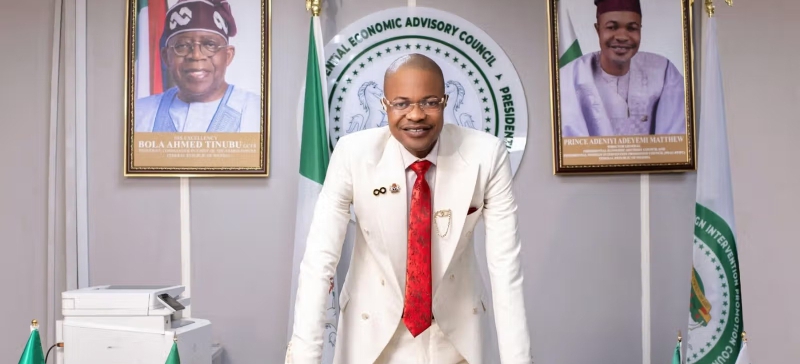
The controversy centers around one Adeniyi Adeyemi Matthew, who presented himself as the Director- General of the PFIPC, falsely claiming a presidential appointment.
The presidency’s statement, issued by Bayo Onanuga detailed how Adeyemi allegedly forged appointment letters and other official documents, used false claims to seek diplomatic support and visa facilitation, and opened multiple bank accounts in the names of purported government agencies.
The ICPC’s mandate is broad, covering not only Matthew and his collaborators but also the appearance of official legitimacy. However, public reaction suggests that the official explanation has only deepened the mystery.
Critics are questioning how Adeyemi, an alleged con artist with a history of
fraudulent misrepresentation, could have operated for so long within the federal secretariat, meeting with ambassadors, corresponding with ministries, and even requesting diplomatic notes without internal support.
One of the most damning revelations is the allegation that the PFIPC, a non- existent agency, was allocated over ₦1.3 billion in the 2026 Appropriation Act.
This raises critical questions about the scrutiny processes within the National Assembly and the Office of the Accountant -General of the Federation, which allegedly allowed Matthew to fraudulently open a CBN account.
Former Vice President Atiku Abubakar has called for independent investigation, giving President Tinubu seven days to launch one. This reflects a broader sentiment among Nigerians who are demanding transparency, accountability beyond the arrest of a single individual.
The death of a key witness, Dolapo Babatunde Tanimola, who Adeyemi claimed assisted him in procuring the fake appointment letter, in a hotel fire just days before Adeyemi’s arrest, has further fueled speculation and calls for a thorough, independent probe.
The scandal has become a mirror reflecting the fragility of public institutions in Nigeria.
As one commentator noted, “No single individual should possess the capacity to allegedly navigate multiple ministries, agencies, diplomatic channels, financial institutions and the nation’s budgeting process without encountering functioning safeguards.
Unless, of course, those safeguards were never functioning at all. Or worse, they were deliberately suspended.
The public is questioning how office allocations, budget lines, and official correspondence could have been processed for a non- existent entity without the complicity or negligence of multiple government officials.
President Tinubu’s directive to investigate is a crucial first step. However, for many Nigerians, the investigation must go beyond identifying individual culprits.
It must address the systemic weaknesses that allowed such an elaborate scam to unfold, uncover any collaborators within the government, and implement robust measures to prevent future occurrences.
The integrity of the presidency and the credibility of government institutions
are at stake, and only a truly transparent and comprehensive investigation can restore public trust.