


Tensions in the Middle East reached a fever pitch this week as the United Arab
Emirates (UAE) successfully intercepted a wave of Iranian missiles and drones, triggering a chorus of the international condemnation led by Canada and other global powers.
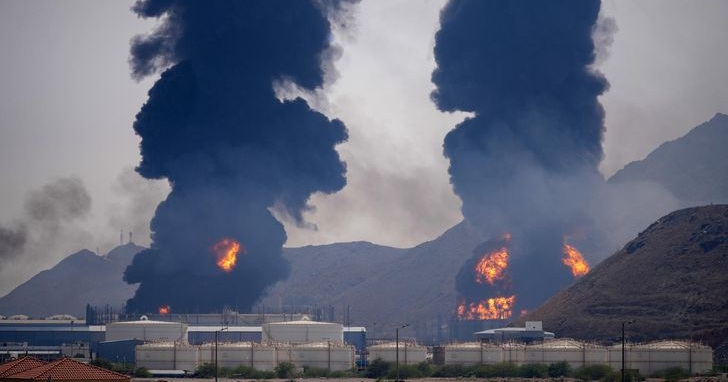
The attacks, which targeted critical infrastructure including the key oil port of Fujairah, have sparked fears of a wider regional conflict.
While UAE air defenses were largely successful in neutralizing the threats, officials confirmed that a drone strike at Fujairah resulted in a significant fire and three injuries, marking one of the most direct provocations in the ongoing regional standoff.

Canada Leads Western Condemnation
In a sharp diplomatic rebuke, Canadian Prime Minister Mark Carney issued a statement condemning the strikes in the strongest possible terms.
Taking to social media platform X,
Carney described the assault as a “blatant violation of international law.”
“Canada strongly condemns Iran’s unprovoked missile and drone attacks on the United Arab Emirates,” Prime Minister Carney wrote. “We stand in steadfast solidarity with President Mohammed bin Zayed and the people of the UAE during this time of crisis.” Carney further praised the “heroic efforts” of the UAE’s defensive units, noting that their rapid response undoubtedly saved lives and protected vital civilian infrastructure.
The Prime Minister’s office later confirmed that Canada is in close contact with its Gulf partners to coordinate a diplomatic response aimed at de-escalation.
A Region Bracing for Escalation
The UAE Ministry of Foreign Affairs characterized the attacks as “dangerous escalation” that threatens the stability of the entire global energy market.  In a formal statement, Abu Dhabi asserted its “full and legitimate right” to defend its territory, though it emphasized a preference for diplomatic solutions if possible.
The scale of the attack was significant. Mobile alerts were issued to residents in Dubai and Abu Dhabi as air defense sirens echoed through the cities.
While the majority of the projectiles were downed, the strike on Fujairah, a global hub for oil bunkering sent ripples through international markets, causing a brief but sharp spike in crude oil prices.Global Reactions: Calls for Restraint and Strength
The international community was quick to respond, with reactions ranging from calls for immediate diplomacy to warnings of military retaliation.
The United Nations (UN) Secretary -General António Guterres condemned the “military escalation” and urged all parties to exercise maximum restraint to avoid a full-scale war.
The United States President Donald Trump referred to the conflict as a “mini -war” and indicated that U.S. forces had already engaged Iranian fast boats in the Gulf.The Germany Chancellor Friedrich Merz
Urged Tehran to return to the negotiating table, calling the attacks “unacceptable breach of regional peace.”
Saudi Arabia Ministry of Foreign Affairs
expressed full support for the UAE, warning that Iranian “aggression” risks an uncontrollable regional conflagration.
European Union High Representative
called for an emergency meeting of the UN Security Council to address the
“unprecedented” nature of the drone swarms.The Path Forward
As the smoke clears over Fujairah, the focus shifts to the United Nations Security Council, which is expected to convene an emergency session later this week.
Diplomatic sources suggest that a new round of sanctions against Iran’s drone and missile programs is being drafted by a coalition of Western and Gulf nations.
For now, the UAE remains on high alert. “Our defenses are proven, but the threat remains,” a senior UAE military official stated.
“The world must decide if it will allow this shadow war to step into the light, or if diplomacy can still find a way back from the brink.”