

Introduction
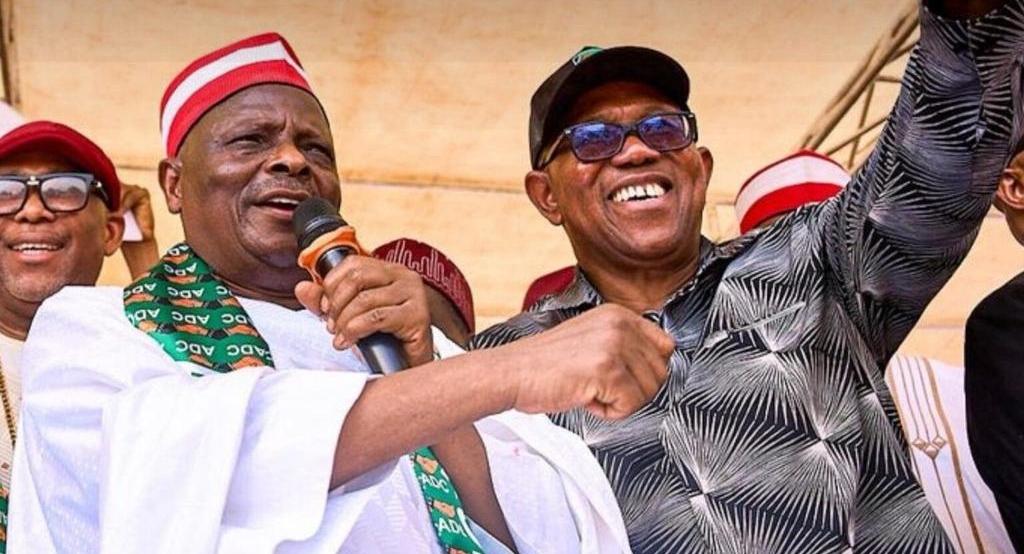
In a significant political development ahead of 2027 general elections, former presidential candidates Peter Obi and Rabiu Kwankwaso have officially joined the Nigeria Democratic Congress (NDC).
This move, announced on May 4, 2026, marks a major realignment within the opposition landscape, following their departure from the African Democratic Congress (ADC) due to persistent internal crises and litigations.
Background: The Exodus from ADC
Both Peter Obi, who previously contested under the Labour Party (LP), and Rabiu
Kwankwaso, a former New Nigeria People’s Party (NNPP) candidate and leader of the Kwankwasiyya movement, had joined the ADC in December 2025.

However, their tenure in the ADC was short-lived, as they cited a “toxic” political environment and incessant internal disputes as reasons for their exit.
Obi explicitly stated that his decision was not due to personal grievances with ADC
Chairman Senator David Mark or former Vice President Atiku Abubakar, but rather pervasive internal crises that hindered effective political engagement.
The Move to NDC
Obi and Kwankwaso formally announced their defection to the NDC on Sunday, May 3, 2026, during a meeting in Abuja. They emphasized their desire for a peaceful political platform free from internal conflicts, which they believe will allow them to focus on national development.
Kwankwaso highlighted the ideological alignment between their political aspirations and the NDC’s priorities, particularly in areas such as education, youth empowerment, and national unity.
The urgency of their move was underscored by the impending May 6, 2026, deadline for the Independent National Electoral Commission (INEC) to submit party membership registers. Reactions and Implications
The defection has elicited varied reactions across the political spectrum:
• African Democratic Congress (ADC): While Obi clarified that his departure was not personal, the move undoubtedly signifies a blow to the ADC, which has been grappling with internal instability.
• All Progressives Congress (APC): The ruling APC has reportedly mocked Obi’s move, suggesting he is seeking a “free presidential ticket”.
This indicates a perception that Obi and Kwankwaso opportunistically seeking a viable platform for their 2027 ambitions.• Nigeria Democratic Congress (NDC): Senator Seriake Dickson, the National Leader of the NDC, warmly welcomed Obi and Kwankwaso, recognizing them as influential figures with strong grassroots appeal.
He emphasized the NDC’s commitment to integrity, transparency, and inclusive governance, particularly focusing on youth and women’s participation.
The presence of supporters chanting “O-K is okay” (referring to Obi- Kwankwaso) at their reception further highlights the enthusiasm surrounding their entry into the NDC.
• Public and Political Analysts: The move widely seen as significant realignment ahead of the 2027 elections, potentially consolidating opposition forces. Analysts suggest that the formation of a formidable opposition bloc could challenge the incumbent party.
The emphasis on litigation-free politics by Obi and Kwankwaso also resonates with a public weary of protracted legal battles following elections.
Conclusion
The entry of Peter Obi and Rabiu Kwankwaso into the Nigeria Democratic Congress represents a pivotal moment in Nigeria’s political landscape.
Driven by a desire for a stable and litigation-free platform, their move signals a potential consolidation of opposition forces aimed at challenging the status quo in 2027 general elections while the coming months will reveal the full impact of this realignment on Nigeria’s political future.