

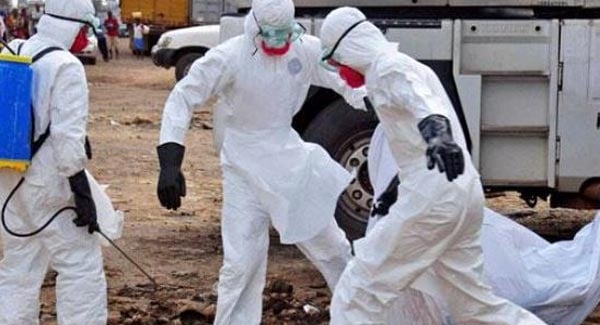
In the early hours of May 17, 2026, a stark reality settled over the Democratic Republic of the Congo (DRC) and Uganda.
The World Health Organization (WHO) declared the rapidly spreading the Bundibugyo Ebola outbreak a public health emergency of international concern.
The invisible enemy had already claimed lives, and the race against time had officially begun. The numbers paint a grim picture.

With 101 confirmed cases and 10 deaths in the DRC, the true scale of the epidemic is believed to be much larger, with over 900 suspected cases and 220 suspected deaths.
The virus has also crossed borders, with Uganda reporting five confirmed cases and one death.
Recognizing the severity of the situation, WHO upgraded the national risk assessment to “very high,” while countries bordering the DRC remain on high alert. The response to this crisis is a testament to the power of unity and decisive action.
In Uganda, President Museveni made the difficult but necessary decision to cancel Martyrs’ Day commemoration, an event that typically draws up to 2 million people, to prevent further spread of the virus.
Meanwhile, WHO, in close partnership with the Africa Centres for Disease Control and Prevention (Africa CDC) and local governments, is mobilizing resources and expertise.  A continental Incident Management Support Team is being established, and a multi-agency Strategic Preparedness and Response Plan is in its final stages.
However, the path to containment is fraught with challenges. The delayed detection of the outbreak means health officials are playing catch-up with a fast-moving epidemic.
The situation is further complicated by severe insecurity in affected provinces of Ituri and North Kivu, where intensified fighting has displaced over 100,000 people. Distrust of outside authorities among the local population adds another layer of difficulty, making the community engagement and trust-building critical priorities.
Adding to the urgency is the lack of approved vaccines or therapeutics for the Bundibugyo virus, which has only seen two previous outbreaks in 2007 and 2012.
In response, WHO is fast-tracking the evaluation of potential treatments, including two monoclonal antibodies
and the antiviral obeldesivir, in clinical trials. Discussions are also underway to advance candidate vaccines in the development pipeline.
“We are facing an extremely serious and difficult outbreak. It will get worse before it gets better,” warned Dr. Tedros Adhanom Ghebreyesus, WHO Director- General.
“But we know this virus, and we know how to stop it. We have stopped every previous Ebola outbreak, and we will stop this one too. As the world watches, the commitment of the DRC, Uganda, Africa CDC, WHO, and their partners remains unwavering.
The fight against the Bundibugyo Ebola outbreak is not just a battle against a virus; it is a race to save lives, build trust, and demonstrate the resilience of global health cooperation.
The question is not if the outbreak will be stopped, but how quickly, and at what cost.