


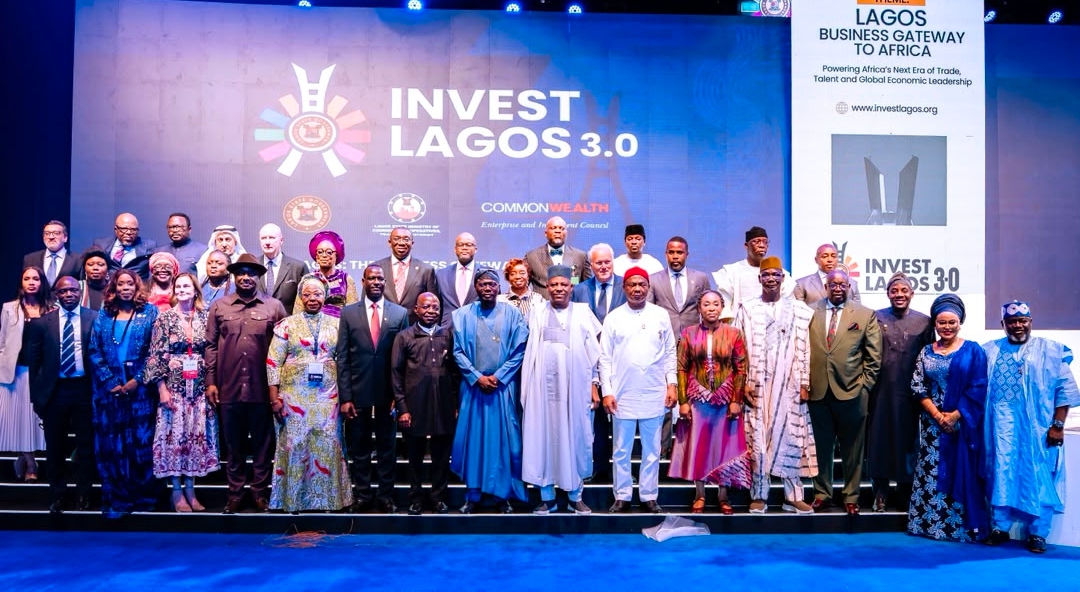
Vice President Kashim Shettima has declared that Nigeria’s ambitious goal of achieving a one-trillion-dollar economy will be fueled by a potent combination of enterprise, strategic investment, and coordinated reforms across all governmental tiers.
Speaking at the Invest Lagos 3.0 Summit in the State on Monday, the Vice President highlighted Lagos State as a prime example of how subnational leadership can significantly accelerate national economic transformation.
Addressing a diverse audience of policymakers, global investors, entrepreneurs, and business leaders, Shettima emphasized that Nigeria’s economic future hinges on fostering an environment where capital, innovation, and productive enterprise can flourish.
He lauded Lagos as not merely a commercial capital, but a dynamic testing ground for groundbreaking ideas, effective governance, and economic execution.
“Lagos is the livewire of our continent. Lagos is the furnace in which our ideas are tested against the discipline of execution. Lagos is the great doorway through which Nigeria continues to greet the future,” the Vice President stated, underscoring the state’s pivotal role.
He attributed Lagos’s sustained growth trajectory to legacy of long-term planning and governance reforms initiated since Nigeria’s return to democratic rule, particularly crediting President Bola Ahmed Tinubu for laying the foundation of this successful development model.
Shettima also commended the Governor, Babajide Sanwo-Olu for his commitment to maintaining Lagos’s growth momentum and enhancing its appeal as a premier destination for investment and business expansion.
The summit’s theme, “Lagos: The Business Gateway to Africa,” resonated with the Vice President’s assertion that cities are increasingly becoming the architects of global production systems, supply chains, innovation networks, and investment flows.
Reaffirming the Tinubu administration’s economic agenda, the Vice President Shettima acknowledged that recent macroeconomic reforms, though challenging, were essential to restore market confidence, improve fiscal sustainability, and attract large-scale private investment.
He stressed that sustainable prosperity demands structural discipline and economic realism, stating, “We have taken difficult decisions because we understand that the economy of our dream cannot be built on illusions.
“It must be built on productivity, discipline, competitiveness, and the courage to create a climate in which enterprise can breathe.”
Highlighting Nigeria’s immense long-term potential, the Vice President pointed to the country’s demographic profile and strategic position within the African Continental Free Trade Area (AfCFTA) as unique advantages for industrial the expansion and regional competitiveness.
With projections indicating Nigeria will be among the world’s largest populations by 2050 and AfCFTA providing access to a market of over 1.4 bn people, Shettima asserted that the country is poised to become Africa’s leading hub for the production, logistics, innovation, and investment.