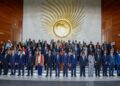


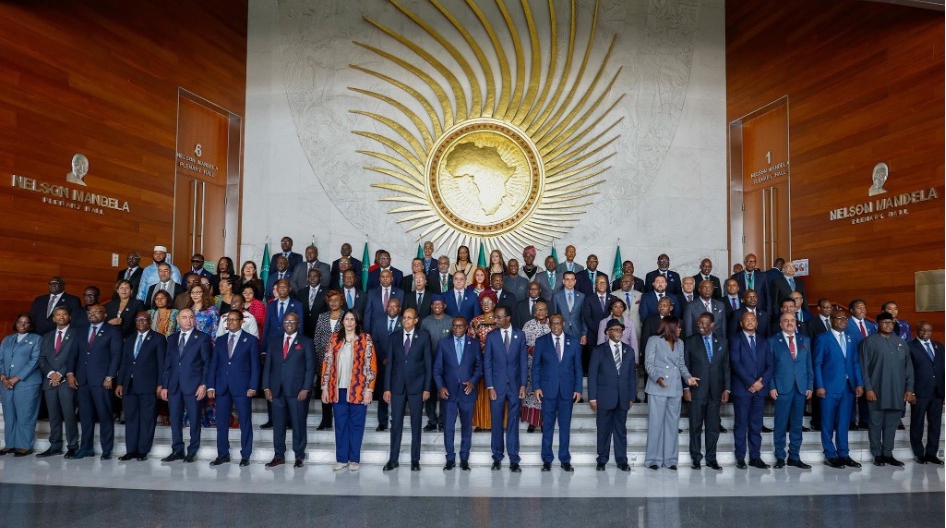
The 49th Ordinary Session of the African Union’s Executive Council opened on Tuesday 28 July with a message that could not have been louder: Africa is done waiting for permission.
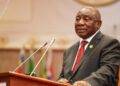
In a sweeping address to foreign affairs ministers, permanent representatives, and commissioners from across the continent, AUC Chairperson Mahamoud Ali Youssouf laid out a vision of Africa as a self-reliant, globally assertive force – one that confronts its challenges head -on and demands a central role in shaping the world order.
The setting was deliberate. At a time of deep global instability — from the escalating conflict in the Middle East and disruptions to the Strait of Hormuz to the persistent spread of violent extremism across the Sahel — the Chairperson stressed that Africa’s economic and security interests are inextricably linked to decisions being made far beyond its borders.
Yet rather than retreat into defensiveness, the AU’s posture was one of strategic engagement. The Commission, Youssouf affirmed, remains closely seized of these developments and continues to provide timely analysis and advice to support collective continental responses.
On the home front, the challenges are no less urgent. The Chairperson recalled his recent solidarity visits to Sahel nations, reaffirming the AU’s commitment to the supporting member states in confronting shared security threats.
He also extended condolences over the
ongoing Ebola outbreak in Democratic Republic of the Congo, noting that Africa CDC is coordinating the continental response alongside national and international partners.
These are not distant crises; they are Africa’s crises, and the Union is determined to lead the fight. But what made this session remarkable was not the cataloguing of problems — it was the boldness of the ambition.
The AU Theme of the Year — “Assuring Sustainable Water Availability and Safe Sanitation Systems to Achieve Agenda 2063” — frames the year’s work in terms of survival, dignity, and transformation.
Addressing this theme requires more than rhetoric; it requires resources. And here, the Chairperson was unflinching. Achieving the aspirations of Agenda 2063 will demand approximately US$2 billion in additional financial mobilization, he warned.
The Commission’s mission, therefore, is to create the political, policy, and institutional environment necessary to unlock both public and private
investment at scale.
Institutional reform is also underway. Youssouf informed the Council that the Skills, Audit & Competency Assessment (SACA) process has been completed — a signal that the AU is not only demanding more from its partners but also from itself.
Prudent financial management,
strengthened accountability, and results-based governance are now non-negotiable standards.
The chorus of ambition was echoed by others at the podium. Burundi’s Foreign Affairs Minister Édouard Bizimana, now chairing the Executive Council, delivered what may have been session’s defining line: “Global governance without Africa is incomplete and therefore ineffective.”
Africa’s entry into the G20, he noted, is not merely symbolic — it is a recognition that the continent has become indispensable to global economic governance.
Africa must now shed the role of rule- consumer and become a standard- maker, he urged, calling on member states to defend the Ezulwini Consensus and the Sirte Declaration with one voice.
Ethiopia’s Foreign Minister, Gedion Timothewos, reinforced this message. Africa, he said, must finance its own development, manage its own resources, and emerge as a credible and authentic voice on the world stage.
UNECA Executive Secretary Claver Gatete added that domestic resource mobilization must become the foundation of Africa’s economic
transformation — industrialization, regional integration, and expanded productive capacity cannot wait for external lifelines.
The message is clear: Africa is done asking for a seat at the table. It is redesigning the table entirely.
Over the next two days, the Council will deliberate on the implementation of Agenda 2063, review reports from ministerial committees, consider the appointment of external auditors,
and adopt its decisions for the 8th Mid-Year Coordination Meeting.
The session concludes on July 29 with the adoption of the Executive Council’s decisions — but the real outcome, if
this opening is any indication, is a continent that has decided to write its own future.