


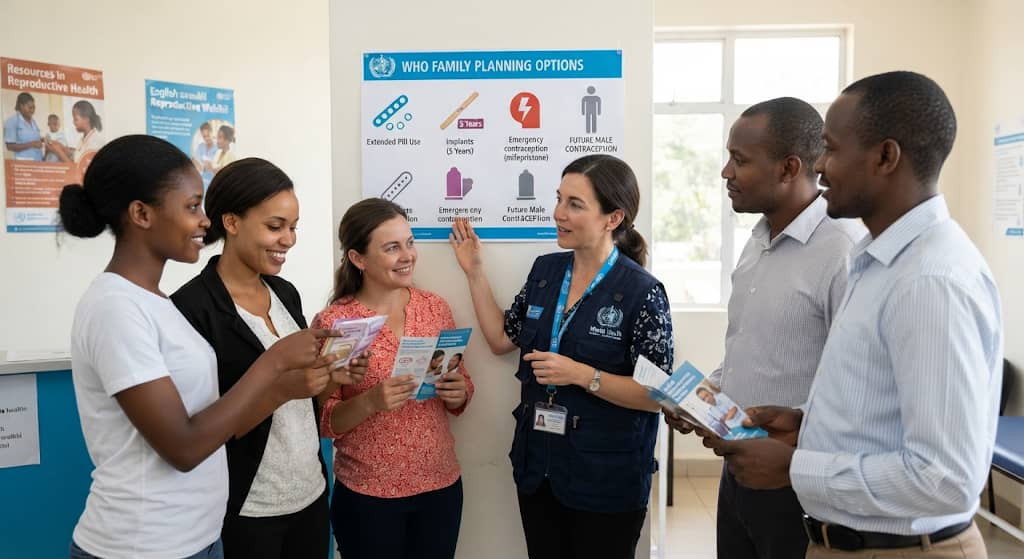
The World Health Organization is urging countries to expand access to a wider range of contraceptive methods, which include new ways to use existing options, additional form of emergency contraception and the first formal product framework for future male contraceptives.
The recommendations are set out in the WHO’s new publication, WHO guidelines on expanding contraceptive options.
The agency said the guidance is intended to help governments update family- planning policies using the best available evidence and to give people more control over whether to use contraception, which method to choose and when to change or stop it.
The call comes as an estimated 164 million women who want to delay or avoid pregnancy are not using contraception, highlighting what WHO described as an urgent need for better access and a broader selection of methods.
More flexibility for existing methods
Under the new guidance, combined oral contraceptive pills may be taken for extended periods of up to six months or continuously for up to one year, offering alternatives to traditional cyclical use.
WHO also supports the use of contraceptive implants for up to five years. Extending the period before replacement could reduce the number of procedures and clinic visits required, as well as associated costs, the agency said.
The guideline recommends mifepristone, at doses of 10 to 50 milligrams, as an additional emergency contraception option. It should be taken as soon as possible and within five days of unprotected sex.
According to WHO, available evidence indicates that mifepristone at these doses is likely to be as safe and effective as other emergency contraceptive methods.
“Choice is a gender equality issue,” said Pascale Allotey, director of WHO’s Department of Sexual, Reproductive, Maternal, Child and Adolescent Health and Ageing. Adding, “Contraception isn’t one-size-fits-all.”
Allotey said people need options that take account of convenience, invasiveness, behaviour, reliability and accessibility. “Real choice means the confidence and control to choose a method, change it, or stop it,” she said.
WHO cautions against insufficiently tested options
The agency’s recommendations also draw a line around methods for which the evidence remains inadequate.
WHO called for further research into ormeloxifene before it is included in family-planning programmes, citing limited evidence on its safety.
It recommended against adding quinestrol-containing contraceptive pills to national contraceptive programmes because of limited evidence and reports of serious adverse events.
The cautions underscore the agency’s position that expanding contraceptive access must be accompanied by clear information about the strength and limitations of the evidence supporting each method.
Push for male contraceptive development
WHO is also seeking to expand contraceptive choices under men’s control. At present, men have relatively few options, principally condoms, withdrawal and vasectomy.
Even so, the agency estimates that male methods are relied on by about 30% of couples. Research cited by WHO challenges the assumption that men would not use new contraceptives.
In a study across four low- and middle- income countries, more than 75% of
couples surveyed said they would be willing to use a new male contraceptive, while more than 85% of women said they would trust their male partners to take responsibility for contraception.
To translate that demand into products, WHO has developed its first Target Product Profile for male contraceptive methods.
The framework identifies characteristics future products should aim to meet, including safety, effectiveness, acceptability and affordability.
WHO said the profile is intended to give researchers, funders and developers clearer direction and help create market that better reflects public needs and preferences.
Several hormonal and non-hormonal male contraceptive candidates are under development, with number of promising methods in advanced clinical trials.
WHO said new reversible male contraceptives could reach the market within the next five to 10 years, although availability will depend on the results of ongoing research, regulatory review and
product development.
The agency said it will continue supporting countries as they revise policies and plans for family planning based on the latest scientific evidence.