


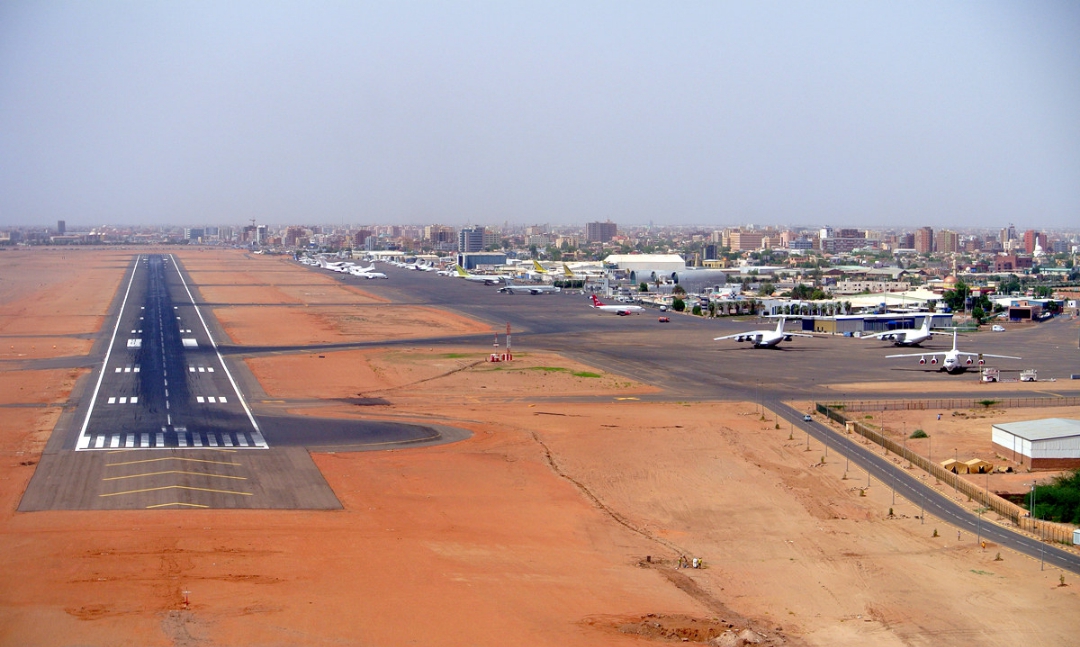
The State of Qatar has issued a strong condemnation following series of drone strikes that targeted the grounds of the Khartoum International Airport in Sudan recently.
The attacks, which occurred earlier this week, have forced authorities to suspend operations at the vital transport hub for three days, escalating tensions in a conflict that has ravaged the nation for over three years.
In a statement released on May 5, 2026, the Qatari Ministry of Foreign Affairs described the drone strikes as a “blatant violation of Sudan’s sovereignty and a clear breach of the rules of international law and the Charter of the United Nations”.

The Ministry emphasized Qatar’s categorical rejection of targeting civilian objects and vital facilities, reaffirming its
full support for the unity, sovereignty, and stability of Sudan.
The condemnation from Doha comes amid explosive allegations from the Sudanese Armed Forces (SAF) while its officials have publicly accused the United Arab Emirates (UAE) and Ethiopia of orchestrating the recent drone attacks.
According to reports, the SAF claims that the drones utilized in the strikes were launched with the backing of these
foreign nations, further internationalizing a conflict that has already drawn widespread concern. Regional Reactions and Escalating Tensions
The attack on Khartoum International Airport has shattered a period of relative calm in the Sudanese capital.
The suspension of airport operations significantly hampers humanitarian aid delivery and civilian movement in a country already grappling with a severe crisis.
Egypt also swiftly condemned the attacks. On Tuesday, Cairo warned of the grave implications the strikes hold for Sudan’s stability and the broader region, echoing concerns about a wider escalation of the conflict. The accusations against the UAE and Ethiopia add a complex layer to the ongoing civil war between the SAF and the paramilitary Rapid Support Forces (RSF).
The conflict, which began in April 2023, has entered its fourth year, marked by widespread displacement, mass civilian casualties, and allegations of war crimes committed by all warring parties.
The Broader Conflict Context
The situation in Sudan remains dire. Recent reports indicate that the RSF has consolidated control over the Darfur region following the fall of el-Fasher late last year and has pushed eastward into Kordofan. Meanwhile, the SAF has been attempting coordinated offensives around the metropolitan areas of Khartoum, Omdurman, and Bahri.
The international community has repeatedly called for an end to the violence.
In its statement, the Qatari Ministry of Foreign Affairs reiterated its stance, “calling for a resolution to the armed conflict in Sudan through dialogue and peaceful means, in order to achieve the aspirations of its fraternal people for peace, development, and prosperity”.Qatar has been an active participant in international efforts to mediate the crisis, recently taking part in the Third Int’l Conference on Sudan held in Berlin in April 2026.
As the SAF confronts the UAE and Ethiopia over their alleged involvement, the prospect of a peaceful resolution appears increasingly fraught.
The targeting of critical infrastructure like Khartoum International Airport not only violates international norms but also deepens the humanitarian catastrophe facing the Sudanese people.