

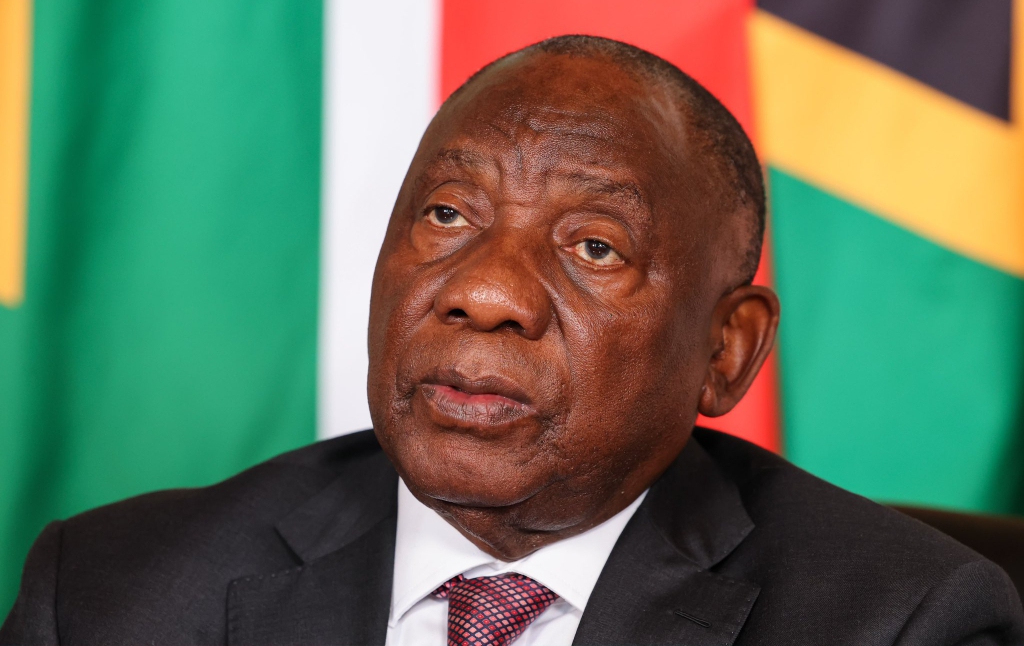
President Cyril Ramaphosa has urged South Africans to treat the country’s constitutional values as a shared national heritage, warning that gender- based violence, xenophobia, racism and inflammatory public speech threaten the social fabric built since the end of apartheid.
In his latest weekly address, released after Heritage Day celebrations, the President said South Africa’s diversity was a source of strength but stressed that the country’s identity extended beyond its languages, cultures, traditions and customs.

The Constitution’s commitment to non-racialism, non-sexism, equality, democracy and human dignity, he said, was itself part of the nation’s common heritage—and required daily protection.
“Heritage is not only what we celebrate. It is also what we defend,” the President said.
The address followed a week in which South Africans from different racial, cultural and religious communities shared images of their own traditions and participated in those of.others.
The President said such displays reflected the possibility of a country in which all citizens could feel they belonged.
He also paid tribute to the decisions that made democratic South Africa possible, saying the historic choice made by South Africans in 1994 was to acknowledge the injustices and suffering of the past while committing to live together and build a new nation.
Warning on violence against women
A central focus of the address was the continuing crisis of violence against women.
The President said the abuse, rape and killing of women were “a stain on our national conscience” and incompatible with a society founded on freedom, equality and human dignity.
Ramaphosa warned that South Africa could not claim to uphold those principles while half of its population lived in fear of violence.
He also condemned the public humiliation of women, saying it was not harmless and helped reinforce attitudes that sustain discrimination and
abuse.
The comments come amid continued national concern over gender-based violence and the vulnerability of women and children.
The President’s remarks placed the issue within a broader argument: that the values celebrated during Heritage Day must also shape public conduct and the protection of citizens.
Migration, borders and xenophobia
The President rejected xenophobia and intolerance, recalling the support that African countries provided during South Africa’s liberation struggle. He said democratic South Africa remained committed to African unity and integration.
At the same time, he maintained that migration must be managed within the law. Government, he said, had a responsibility to control the country’s borders effectively, while everyone living in South Africa was required to obey its laws.
He cautioned that, at a time when undocumented migration was fuelling social tensions, inflammatory comments about foreign nationals were “dangerous and irresponsible”.
The remarks sought to distinguish between lawful border management and rhetoric that targets migrants or encourages hostility towards them.
Redress is not apartheid, President says
The address also defended policies aimed at correcting the economic and social injustices of apartheid.
The President said there was “no moral equivalence” between constitutional redress and discrimination, rejecting comparisons between measures designed to overcome racial exclusion and the apartheid laws that enforced exclusion, dispossession and inequality.
South Africa, he said, remained committed to addressing the injustices of the past and could not return to the racial division and oppression that defined apartheid.
Ramaphosa warned that the country’s democratic settlement should not be
undermined by attempts to turn citizens against one another.
He called on South Africans to remain vigilant against language and actions that polarise communities, inflame public opinion or reopen historical wounds.
Freedom of expression carries responsibility
While acknowledging that the Constitution guarantees freedom of expression, the President stressed that the right comes with responsibility.
He condemned language that glorifies killing or encourages hostility, particularly in a country facing unacceptably high levels of violent crime.
He also criticised efforts to spread claims of a “white genocide” abroad and discourage investment in South Africa,
describing such conduct as neither responsible nor patriotic at a time of high unemployment and the need for stronger economic growth.
The President’s comments did not identify individuals, but addressed a range of controversies surrounding public debate on race, migration, crime, gender and South Africa’s international reputation.
A daily choice
Concluding the address, the President said South Africans were united by constitutional values that transcended race, gender, language, culture and geography.
Ramaphosa called on citizens to work together to confront the country’s common challenges and to renew every day the choice made in 1994, affirmed through the adoption of Constitution: to build the country together..“That is our shared heritage,” he said. “It is also our shared responsibility”.