

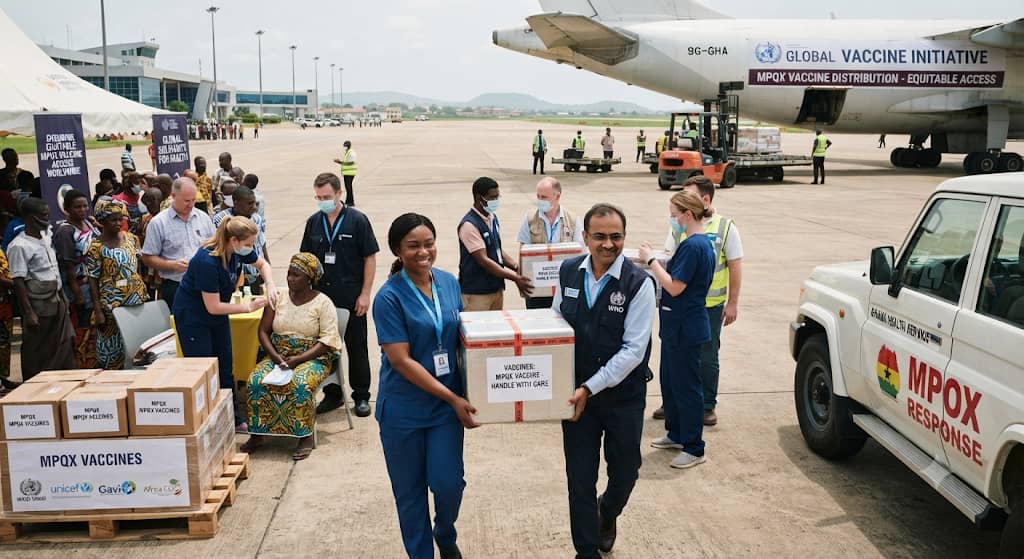
A global initiative to create a long-term stockpile of mpox vaccines has been launched, giving countries a dedicated mechanism to secure doses quickly and equitably during outbreaks.
The stockpile was established on 27 August and is expected to begin operations later this month, according to a joint statement issued by Gavi, the Vaccine Alliance, and its International Coordinating Group (ICG) partners.
The initiative is financed by Gavi and
coordinated by the ICG, whose members include the International Federation of Red Cross and Red Crescent Societies, Médecins Sans Frontières, UNICEF and the World Health Organization.
The programme is intended to address disparities exposed during the 2022 mpox outbreak, when lower-income countries struggled to obtain vaccines.
It follows the Access and Allocation Mechanism created in 2024 during the most recent mpox Public Health Emergency of International Concern and is designed to provide more permanent framework for outbreak response.
Under the new arrangement, countries will be able to request vaccines based on outbreak needs and the expected public-health impact of vaccination.
The partners say the goal is to ensure that doses reach people and communities at greatest risk, regardless of a country’s ability to pay the most.
Outbreaks remain a global concern
Mpox continues to cause outbreaks around the world, with approximately two-thirds of reported cases occurring in the African Region.
From 1 January 2022 through 31 July 2026, 145 countries and territories reported 190,683 confirmed cases and 529 deaths, the statement said.
The disease is caused by a virus that spreads mainly through close physical contact, including sexual contact.
Animal-to-human transmission also continues in parts of Africa, sustaining the risk of new outbreaks.
While mpox can affect people in different circumstances, severe disease is a particular concern for children and people with suppressed immune systems.
Health authorities say vaccination can help contain outbreaks more rapidly, reduce the risk of severe illness and prevent deaths.
The new stockpile is therefore intended not only to improve access to vaccines, but also to shorten the time between the detection of an outbreak and the delivery of a preventive response.
Partners call initiative a step toward equity
Gavi Chief Executive Officer Sania Nishtar said the stockpile was created in response to the unequal access seen during the 2022 outbreak.
She said the mechanism should function as a global public good available to countries that need it, rather than primarily to those able to pay the most.
Gavi’s support for the 2024 emergency response included securing rapid access to vaccine doses through its First Response Fund.
Jagan Chapagain, secretary general and chief executive officer of the International Federation of Red Cross and Red Crescent Societies, described the initiative as an important step in ensuring vaccines reach high-risk communities “when and where they are needed most.”
Médecins Sans Frontières welcomed the stockpile’s emphasis on equal allocation according to demand and the potential impact on disease control.
The medical organisation also called for close cooperation among national, regional and international health systems, noting that different mpox variants can affect different populations.
UNICEF Executive Director Catherine Russell highlighted the particular effects of mpox on children, including stigma, interrupted education and the distress associated with isolation from family and friends.
She said the mechanism should help deliver vaccines more quickly to children, families and communities at heightened risk.
WHO Director-General Tedros Adhanom Ghebreyesus said the stockpile marked a move toward a more sustainable and equitable approach to mpox outbreak response.
He said the model draws on systems used to manage other emergency vaccines and should help countries obtain doses sooner, contain outbreaks and save lives.
Building on an established emergency system
The ICG was created in 1997 after major meningitis outbreaks in Africa. Its mandate is to coordinate emergency supplies and ensure equitable access to licensed vaccines for outbreaks of cholera, meningitis, yellow fever and Ebola virus disease.
It manages global emergency vaccine stockpiles and works with governments, donors and manufacturers to determine their size and composition.
The addition of mpox to the mechanism extends work that began through the temporary Access and Allocation Mechanism established in 2024.
Gavi’s Board formally approved the
creation and financing of the global mpox stockpile in 2025, placing the initiative within the ICG’s longer-term emergency response structure.
The effectiveness of the stockpile will ultimately depend on sustained financing, reliable.vaccine supplies, timely country requests and the ability of partners to deliver doses to affected communities.
Its launch nevertheless represents a significant institutional change: access to mpox vaccines is moving from an ad hoc emergency arrangement toward a
standing global resource.