

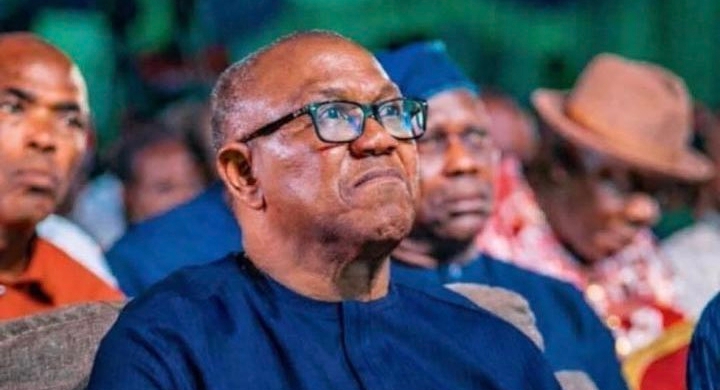
Nigerian Democratic Congress (NDC) Presidential Candidate Peter Obi has used the country’s 66th Independence Anniversary to deliver sharp assessment of the country’s worsening social and economic challenges, accusing the APC -led government of failing to meet the promises it made in 2023.
In an address titled “Nigeria at 66: Looking Back, Looking Forward,” Obi said the anniversary should be more than a celebration, calling it an opportunity for Nigerians to examine the country’s direction and confront its failures honestly.

He painted a bleak picture of conditions across the country, citing what he described as more than 140 million Nigerians living in poverty, over 18 million out-of-school children and youth unemployment and underemployment affecting more than 35 million people.
Obi also pointed to continuing insecurity, including terrorism, banditry and kidnapping, as well as rising food insecurity, maternal and infant mortality, drug abuse and low life expectancy.
He said more than 40 million Nigerians could face extreme hunger by the end
of 2026, while life expectancy stood at 54 years—far below the global average of 74.
The former Anambra State governor said the problems were not the result of a curse or a lack of resources, but of the country’s failure to turn its vast natural and human wealth into security, productivity and shared prosperity.
“Our greatest problem is not a lack of resources; it is the failure to convert our enormous resources into human development, productivity, security and shared prosperity,” he said.
Obi said a recent visit to Sokoto State with Senator Rabiu Kwankwaso had brought the scale of the crisis into sharp focus.
At an internally displaced persons camp in Ramin Kura, Sokoto metropolis, he said thousands of women and children were living in deplorable conditions, without reliable access to education, healthcare or basic necessities.
He described the camp as a symbol of suffering replicated across many parts of Nigeria, arguing that citizens displaced by insecurity should instead be living safely in their communities, farming, attending school and contributing to the economy.
Despite his criticism, Obi struck an optimistic tone, declaring that “a new Nigeria is possible.” He promised that, if elected president, he would make governance measurable, accountable and focused on the welfare and productivity of citizens.
His proposed priorities include decisively tackling insecurity so farmers can return to their land, moving the economy away from consumption, towards production, expanding agriculture, manufacturing, creating jobs and investing in education, healthcare and human capital.
Obi also pledged to spend his holidays in different Nigerian states rather than abroad, saying the visits would allow him to see the country, listen to citizens and better understand their challenges.
He closed by urging Nigerians to reject the idea that failure is their destiny, saying the country’s future would require not only prayers, promises but leadership that treats public office as a sacred trust and citizens who demand accountability. “It is time to build the new and productive Nigeria that is possible,” he said.