

The Federal Government has said that Nigeria’s next phase of economic
management must move beyond stabilisation and deliver visible improvements in jobs, incomes, security and public services.
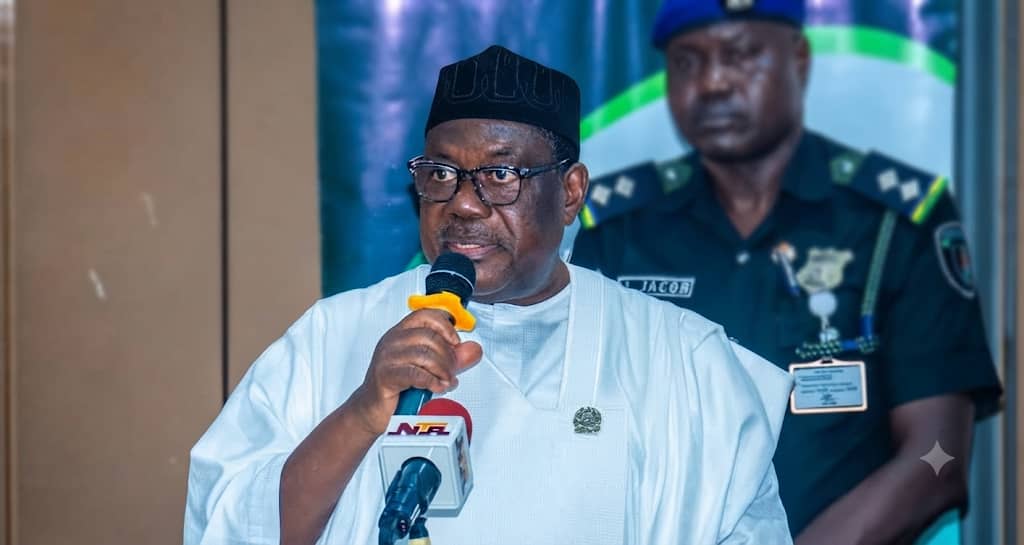
Speaking at a world press conference to launch activities for 66th Independence anniversary, Secretary to the Government of the Federation, Senator George Akume said the administration of President Bola Ahmed Tinubu had laid the foundation for growth through difficult structural reforms.
He acknowledged, however, that millions of Nigerians continue to face poverty, insecurity and inadequate infrastructure.

The anniversary theme, “From Reforms to Stability: Consolidating Nigeria’s Renewed Hope for Shared Prosperity,” reflects the government’s stated ambition to convert economic stability into broad-based prosperity.
Akume said the task now was to ensure
that the gains of reform reached ordinary citizens across the country rather than remaining confined to macroeconomic indicators.
“From reform, we have built stability; from stability, let us deepen growth and
opportunity. Now from growth, let us extend shared prosperity to every corner of Nigeria,” Akume said.
Government defends reform programme
Akume and the Minister of Information and National Orientation, Mohammed Idris, said the government’s programme had confronted long-standing fiscal and monetary distortions.
The measures included ending the fuel subsidy regime, unifying multiple foreign -exchange windows under a more market -driven system, and tightening fiscal and monetary policy.
Idris said the reforms had imposed significant costs on Nigerians but argued that the country was beginning to enter a phase of stronger production and growth.
He reported that real gross domestic product had grown by 4.43 per cent, compared with 4.23 per cent in the preceding year.
He also cited higher foreign reserves, expanded domestic refining capacity and increased investment activity as evidence of improving economic conditions.
According to Idris, the Central Bank of Nigeria had reported that foreign reserves crossed $55 billion for the first time in 18 years.
He also said Nigeria had been removed from the Financial Action Task Force’s grey list and had returned to the J.P. Morgan emerging market bond index after an 11-year absence.
The minister further described Nigeria as the African Union’s digital-trade champion and said it had become Europe’s largest supplier of aviation fuel.
He added that Saudi Arabia’s national airline was expected to begin direct flights to Abuja, presenting development as another sign of Nigeria’s improving international economic position.
The claims were presented as evidence of recovery by the ministers and were not independently verified in the speeches.
Poverty and insecurity remain central challenges
Despite the government’s positive assessment, Akume conceded that the country’s economic progress had not eliminated widespread hardship.
He identified poverty as a major threat and said the administration was working to reduce its effect on households and the wider economy.
He also described terrorism, banditry, kidnapping and other forms of violence as continuing security challenges in parts of Nigeria. These threats, he said, had caused loss of life and disrupted livelihoods.
The government was intensifying military and police operations, improving intelligence, modernising equipment and strengthening cooperation between security agencies and local communities.
Akume said President Tinubu had approved a new national threat assessment and a fiveyear defence plan.
The stated objective is to establish a coordinated security strategy that
will enable parents to send their children to school, businesses to operate and communities to live without fear.
Infrastructure and food security priorities
The government also outlined an infrastructure programme covering roads, railways, airports, seaports, electricity and digital connectivity.
Akume said the country was
expanding transport networks, increasing power generation, improving electricity transmission and distribution, and supporting off-grid solutions for homes and businesses.
Agriculture was presented as a central pillar of the government’s plan. Akume said Nigeria’s large area of arable land and young population gave it the potential to become a major producer of food and agro-industrial goods.
The government, he said, was supporting farmers with seeds, fertiliser, irrigation, storage and processing facilities through the National Agricultural Development Fund and other initiatives.He warned that population growth would intensify pressure on food production.
Citing a projection that Nigeria’s population could reach 450 million by 2050, Akume said the country would need to produce enough food for its own citizens and contribute to food security across West Africa and the wider continent.
He also highlighted water access as a
foundation for agriculture and social development.
Education, healthcare and social protection
The administration said it was expanding access to education and improving schools and teacher quality.
Idris emphasised the importance of connecting Nigeria’s young population to education, technical skills, finance and employment opportunities.
Akume pointed to the Nigerian Education Loan Fund Act, signed in May 2024, as a mechanism for widening access to tertiary education.
The government also said it was
strengthening hospitals and clinics while continuing programmes designed to protect vulnerable citizens. Those programmes include conditional cash transfers, school feeding and vocational training.
The ministers said the initiatives were targeted at women, young people, persons with disabilities and other groups at risk of being excluded from economic recovery.
The government’s position, as set out at the conference, is that fiscal reform must be accompanied by social protection. “No one in poverty should be forgotten,” Akume said, presenting inclusion as a condition of the administration’s shared-prosperity agenda.
A test of delivery
The two speeches framed the anniversary as both a celebration of Nigeria’s endurance and a test of the government’s ability to deliver results.
Idris said the country had survived
civil war, military rule, economic shocks and difficult adjustments because of the resilience of its people and their commitment to a common national destiny.
Akume said Nigeria had preserved its sovereignty, contributed to peace-keeping in Africa and developed important sectors beyond its historic dependence on agriculture and oil.
He also cited growth in telecommunications, banking, manufacturing and services, as well as
the expansion of universities, cities and human capital.
But the ministers’ central message was that past achievements would not be sufficient unless the current reform programme improved daily life.
The government said the Renewed Hope National Development Plan for 2026 to 2030 would focus on productivity, economic diversification, human-capital development and national resilience.
As Nigeria approaches 1 October 2026, the administration is therefore presenting the anniversary as a transition point: from stabilising public finances to creating opportunity at
scale.
Whether the reforms produce the promised jobs, reliable infrastructure, food security and safer communities will determine how convincingly the govt’s economic narrative is received by Nigerians.