
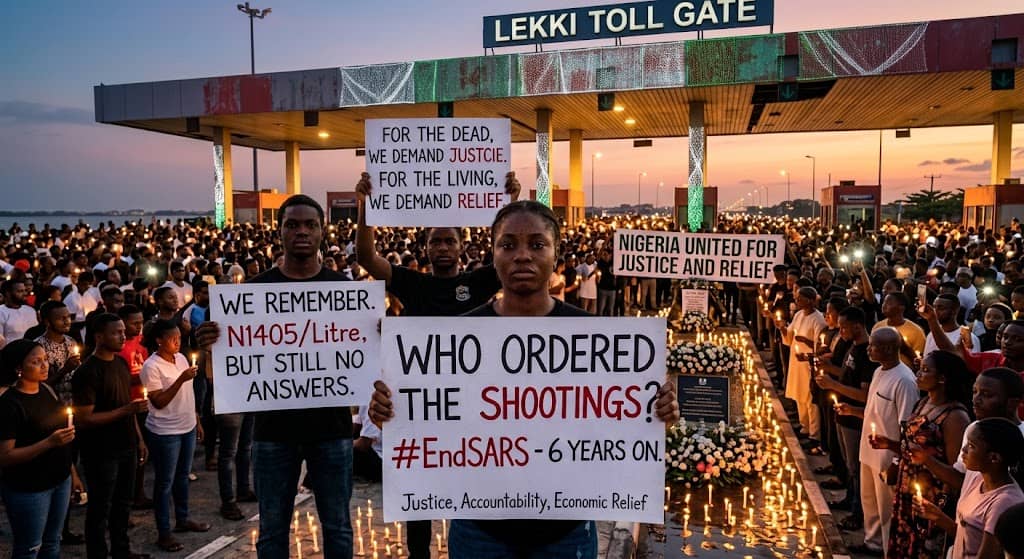
Six years after the deadly #EndSARS protests at Lagos’ Lekki Toll Gate, opposition politicians have renewed calls for justice, accountability and economic relief for Nigerians struggling with rising living costs.

Marking the anniversary of the October 20, 2020 shootings, Atiku Abubakar, the African Democratic Congress presidential candidate, said Nigerians were still waiting for a clear answer to a central question: Who ordered the shootings?
Abubakar accused the ruling All Progressives Congress of failing to address the deaths and alleged abuses associated with the protests.
He also criticised President Bola Tinubu’s response to the tragedy in 2020, saying the then-governor’s comments appeared to question victims rather than demand accountability from those responsible.
He argued that public anger over the incident remained genuine, describing it as “grief that has been left to harden into distrust.” According to him, families of victims continue to seek answers while young Nigerians face worsening economic hardship.
Atiku linked the Lekki anniversary to the country’s cost-of-living crisis, citing petrol prices of ₦1,405 per litre and their impact on transport, food, education, rent and employment.
He highlighted the case of a woman who allegedly resigned from her job because her salary could no longer cover the cost of commuting.
The former vice-president said his proposed Economic Recovery Plan would seek to make Nigeria more affordable through support linked to locally refined fuel, increased domestic production, protection for minimum-wage earners, student assistance and cuts to government waste rather than new taxes.
Peter Obi, presidential candidate of the Nigerian Democratic Congress, also paid tribute to those who died during the protests while described the anniversary as a painful reminder of the price Nigerian youths paid while demanding better governance.
Obi said Nigeria must become a country where citizens are protected rather than brutalised and where young people are heard rather than silenced. He added that no citizen should be punished for demanding good governance and a better future.
Omoyele Sowore, presidential candidate of the African Action Congress, took a more confrontational position, describing the Lekki incident as a “massacre” and demanding the prosecution of those responsible.
Sowore questioned why no one had been prosecuted six years after the shootings and called for renewed investigations into the roles allegedly played by political leaders, security commanders and military personnel.
He pledged that a government led by him would reopen the investigations, establish the full chain of command and prosecute anyone found culpable, regardless of rank or political influence.
The three opposition figures urged Nigerians not to forget the victims of #EndSARS, a movement that began as a protest against police brutality, extortion and extrajudicial killings before expanding into a broader demand for accountable government.
Six years later, the questions surrounding the Lekki shootings remain politically charged, while the anniversary has once again placed justice, human rights and Nigeria’s economic struggles at the centre of national debate.