

The Federal Government has announced the suspension of the proposed increase in registration fees for the West African Senior School Certificate Examination (WASSCE) and National Examinations Council (NECO) Senior School Certificate Examination (SSCE).
This decision follows widespread public criticism and concerns regarding the potential impact of the hike on Nigerian families and educational access.
Background to the Proposed Hike
The initial proposal, communicated in a letter dated June 18, 2026, aimed to raise the registration fee for both WAEC and NECO examinations from the current rates of approximately ₦27,500 and ₦30,000 respectively, to a uniform fee of ₦50,000 per candidate, effective from 2027.
This represented an 82% increase for WAEC and a significant jump for NECO candidates.
The Federal Ministry of Education justified the proposed increment by citing the rising operational costs associated with conducting national examinations, including logistics, security, printing of examination materials, technology deployment, and quality assurance.
The Ministry noted that examination fees had remained largely unchanged for several years despite significant increases in these operational expenses.
Widespread Public Outcry and Reactions
The announcement of the fee hike was met with immediate and strong condemnation from various segments of society, including parents, students, civil society organizations, and prominent political figures.
Critics argued that the increase was insensitive to the prevailing economic hardships faced by Nigerian families, who are already grappling with record inflation, rising food and transportation costs, and declining purchasing power.
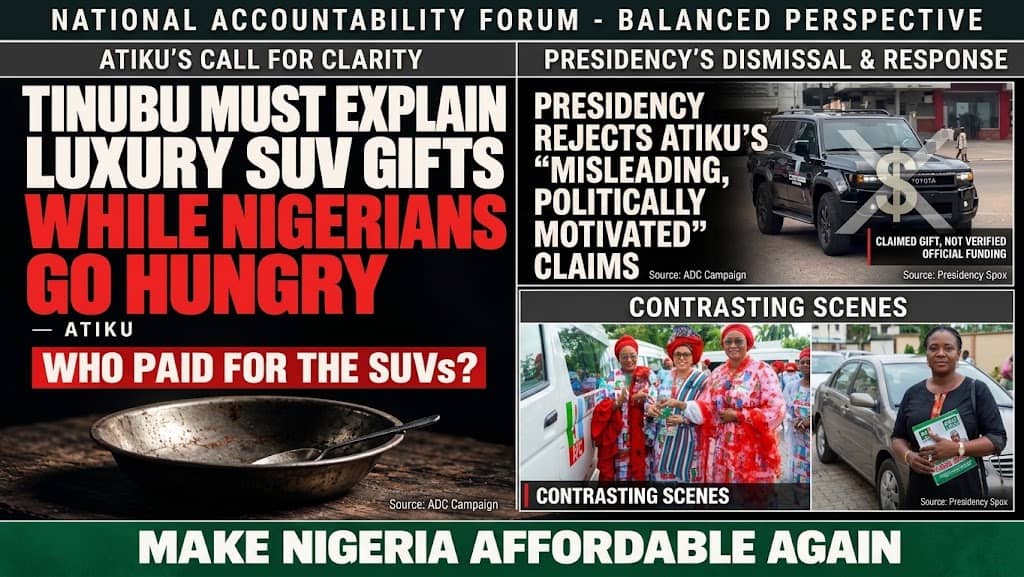
Former Vice President Atiku Abubakar described the hike as “cruel and economically insensitive,” warning that it would deepen educational inequality
and worsen the out-of-school children crisis in Nigeria, which currently affects between 10.5 million and 15 million children.
He emphasized that a government cannot claim to expand access to higher education while simultaneously erecting financial barriers.
Similarly, Peter Obi, the presidential candidate of the Labour Party in the 2023 elections, commended the suspension, stating that education is a fundamental right and a public good, not a source of government revenue.
He argued that imposing multiple fees at the basic education level risks denying many children their right to education and that the state has a duty to invest in preparing its citizens for productive lives.
The National Association of Nigerian Students (NANS) also rejected the increase, criticizing the lack of consultation with student representatives.
The association’s president, Akinteye
Babatunde Afeez, stated, “Anything for us, without us, is against us”.
The Government’s Reversal
In response to the overwhelming backlash, the Federal Ministry of Education issued a statement on Monday, July 13, 2026, announcing the withdrawal of the June 18 letter and
the suspension of the proposed fee adjustment.
The Ministry’s Director of Press and
Public Relations, Folasade Boriowo, explained that the decision was taken to allow for broader consultations and a comprehensive review of the proposal before any final determination is made.
The Minister of Education, Dr. Maruf Tunji Alausa, directed that the implementation of the proposal be halted pending these consultations, aligning with the Federal Government’s commitment to inclusive, transparent, and evidence-based policymaking.
The Ministry stressed that no adjustment to examination fees would take effect until discussions with stakeholders, including examination bodies, state ministries of education, school proprietors, parents’ associations, and organized labor, are concluded.
Moving Forward: The Need for Sustainable Funding
While the suspension has been widely welcomed as a victory for the people, stakeholders emphasize that it should not be the end of the conversation.
There is a consensus on the need to develop a sustainable funding model for WAEC and NECO that strengthens these
examination bodies without transferring the financial burden to struggling families.
The Federal Government has pledged to keep Nigerians informed throughout the
consultation process and reaffirmed its commitment to ensuring that policies affecting students and their families are subjected to adequate scrutiny and reflect the public interest.