

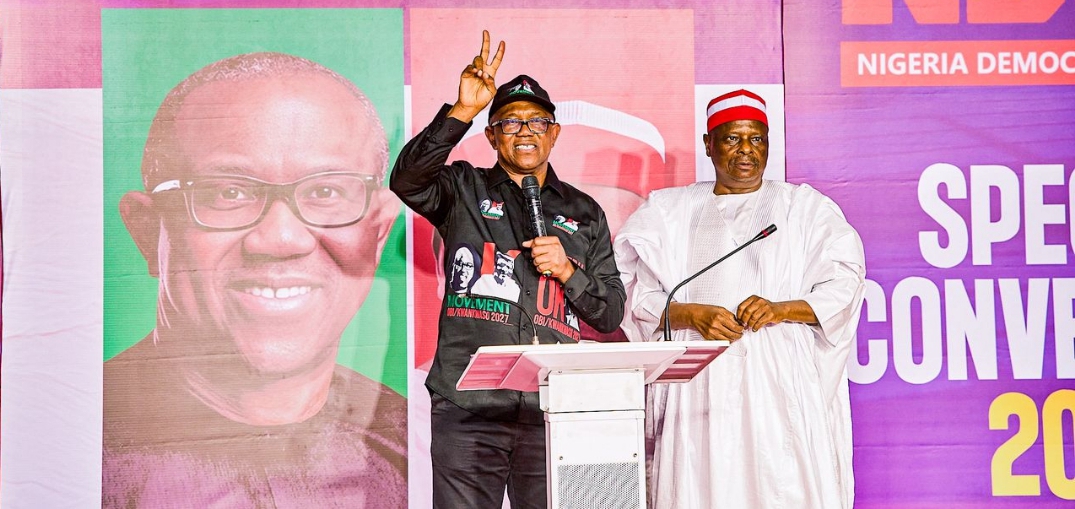
In a moment charged with both gravity and soaring optimism, Peter Obi has accepted the presidential candidacy for the Nigerian Democratic Congress (NDC) on May 30, 2026, delivering a powerful address that resonated with aspirations of a nation yearning for change.
With deep humility, Obi declared, “A New Nigeria is Possible,” setting the tone for a campaign rooted in hope, unity, and a clear vision for national resurgence.
Peter Obi’s speech acknowledged the profound challenges facing Nigeria today: families gripped by anxiety, parents fearing for their children’s futures, and a talented youth questioning their prospects at home.
He painted a stark picture of struggling businesses, suffering communities, and a populace losing faith in governance. Yet, amidst this backdrop of uncertainty, his message was one of unwavering faith in the resilience of the Nigerian people.
Central to Peter Obi’s vision is the imperative of unity. He passionately argued that Nigeria cannot progress while fragmented by ethnic, religious, regional, or narrow political divides.
“Our diversity should not be a source of division; rather, it is among our greatest strengths,” he asserted, calling for the building of bridges, the replacement of mistrust with confidence, and division with understanding.
Citing Will Durant, he warned against selfdestruction, emphasizing the need to heal, unify, and progress together. The candidate then meticulously outlined his strategic approach to critical national issues:
Insecurity: Obi highlighted Nigeria’s alarming decline in global terrorism impact assessments, contrasting it with the nation’s proud history as a significant contributor to international peacekeeping.
He pledged an intelligence-driven, technology-enhanced, proactive, and community-focused strategy to safeguard lives and property, enabling
farmers to return to their fields, students to learn without fear, and investors to regain confidence.
Healthcare: Addressing Nigeria’s dismal global healthcare ranking, Obi committed to doubling health insurance coverage to over 20% within four years, increasing the healthcare budget to a minimum of 10% of GDP.
His plan includes massive investment in
healthcare institutions, training for the workers, and ensuring fully functional primary healthcare centers in all 8,809 wards across the nation.
Education: Recognizing education as the bedrock of national revival, Obi promised heavy investment in schools, teachers, technology, and vocational training.
The goal is to empower youth not just to seek employment but to become job creators, pivoting Nigeria from shared poverty to collective prosperity through knowledge and innovation.
Hunger and Agriculture: Obi starkly revealed Nigeria’s worsening position on the Global Hunger Index, despite its vast uncultivated lands.
He emphasized that transitioning from a
consumption-based economy to a production-driven one, particularly thru significant agricultural investment in the northern region, is the “sole dependable strategy to escape the current depths of hunger and poverty.”
Energy Sector: Confronting the severe power deficit, Peter Obi committed to increasing electricity generation and distribution by a minimum of 10,000 megawatts within four years, a crucial step to unlock economic growth currently crippled by insufficient power.
Unemployment: Acknowledging the true unemployment and underemployment rates far exceed official figures, especially among youth, Obi proposed aggressive support for Micro, Small, and Medium Enterprises (MSMEs) through targeted tax incentives, special interest
rates, and accessible funding across various sectors.
Finally, Obi vowed a tangible reduction in corruption and governance costs, ensuring transparency, accountability in public resource management.
He pledged fierce upholding of the rule of law and a commitment to a true democracy—of the people, by the
people, and for the people—free from interference and fostering respect for opposition parties.
In a significant announcement, Peter Obi nominated Senator Rabiu Kwankwaso as his Vice President, signaling partnership aimed at making democracy truly work for all Nigerians.
His acceptance speech was not merely a political declaration but heartfelt appeal for collective action, urging every citizen to believe in the possibility of a brighter future for the Federal Republic of Nigeria.