

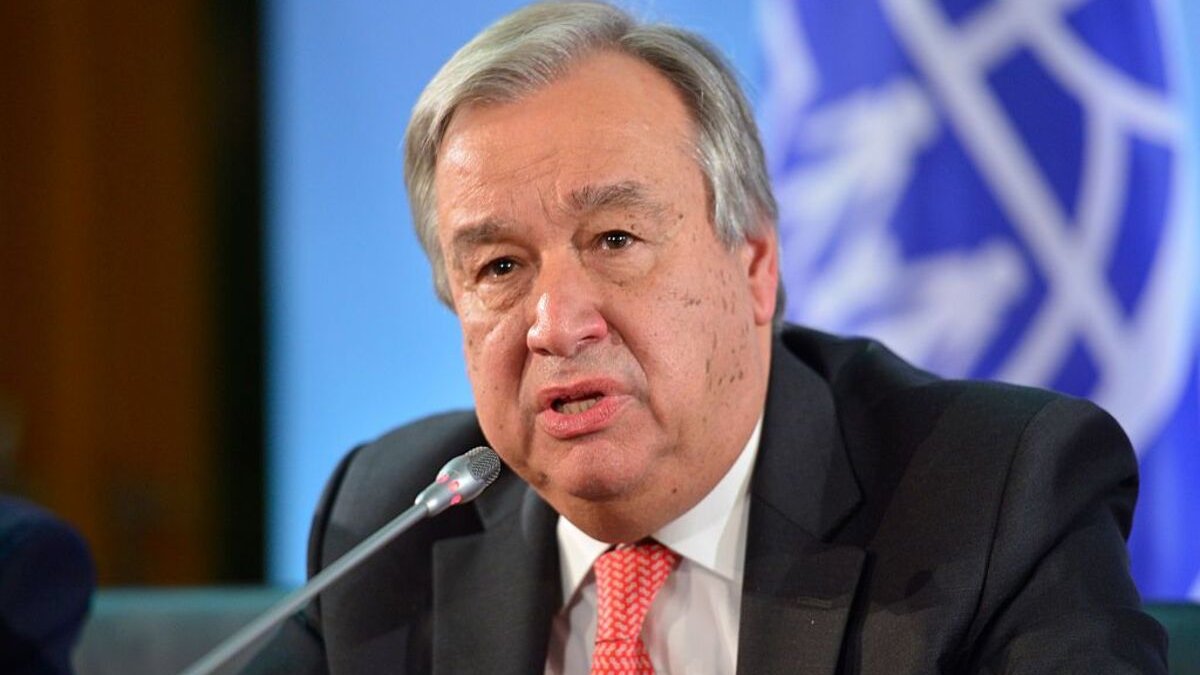
The United Nations Secretary-General António Guterres has warned that the developing economies being squeezed by three overlapping shocks.

Which is the escalation in the Middle East, a potentially record-strength El Niño and the highest global borrowing costs in years—leaving governments with less money to protect households from rising food and fuel prices.
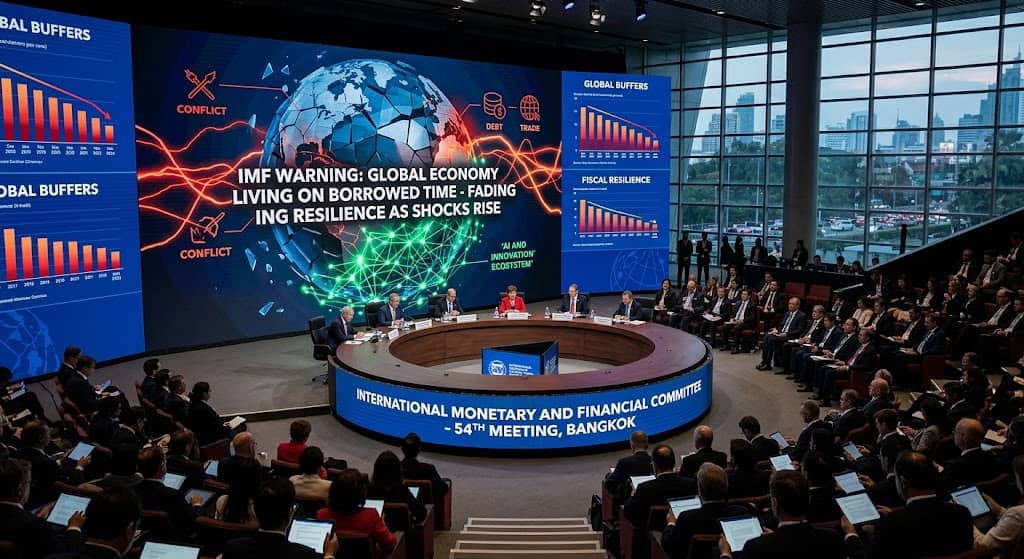
In a statement to the International Monetary and Financial Committee’s 54th meeting recently, Guterres said the current crisis was the third major global spillover in six years to force developing countries into emergency action.
Many, he said, entered the latest
shock with high debt and fiscal reserves already depleted. “The moment for ‘wait and see’ policies has mostly passed,” the United Nations statement said.
He urged governments and international institutions to focus on measures
that can protect poor and vulnerable people before the shocks feed further into household prices and political instability.
Three shocks, one narrowing policy space
The first pressure is energy. The statement says Brent crude averaged $102 a barrel in September, 22% above its July average, after oil markets reacted to the U.S.-Iran conflict, a failed ceasefire process and renewed fears of escalation.
The price level is comparable to the energy and food shock of 2022, the UN said. The second is climate. The speech described El Niño as unusually strong and still intensifying, with effects expected to continue into early 2027.
The World Meteorological Organization’s October update provides the wider context: it says the event is likely to persist through February 2027, could be among the strongest since at least 1950, and is expected to increase the risk of drought, floods, heat extremes and disrupted agricultural conditions in different regions.
The third pressure is financial. The 10-year U.S. Treasury yield reached 5.26% on September 29, while the 30year yield reached 5.59%, according to the statement.
Those benchmarks matter beyond the United States because they influence the cost of long-term borrowing for govts and companies worldwide.
Higher rates, persistent inflation, large fiscal deficits and competition for capital are combining to make debt service more expensive for countries already facing emergency spending needs.
Price controls are becoming harder to sustain Governments initially tried to shield consumers through fuel and food subsidies, price caps, rationing and tax rebates. But the UN statement says that strategy is weakening as the cost
of maintaining it rises.
Across 130 countries, retail gasoline prices were up an average of 26% and diesel prices 38% from the start of the conflict, according to the UN Development Programme.
Only about one in ten countries had kept pump prices unchanged, while price increases between June and September widened in nearly two-thirds of the countries covered. Global explicit fossil-fuel subsidies could exceed $1 trillion this year.
The fiscal choice is stark. UNDP estimates that fully compensating households for the energy and food shock would cost developing countries about 1.1% of their combined gross domestic product.
Targeting support at households below the $6.85-a-day poverty line would cost about 0.3% of GDP—roughly a quarter as much—while still prioritising those
most exposed. The social consequences of abandoning protection could be severe.
UNDP estimates that if the shock were passed through fully, an additional 130 million people could fall below the $6.85 -a-day poverty line, 121 million below $3.65 a day and 66 million below the $2.15 extreme-poverty line.
UNDP cautions that these are estimates of potential exposure, not a count of poverty increases already observed.
A call to move from blanket support to targeted relief
Guterres’s policy message was not for governments to maintain universal subsidies indefinitely. Instead, he argued that countries should shift toward targeted interventions that soften price pass-through for vulnerable households while limiting the drain on public finances.
That approach could include temporary cash support, targeted subsidies and other measures aimed at people least able to absorb higher food, transport and energy costs.
The statement also called for action on fuel reserves and for central banks in low- and middle income countries to have access to sufficient liquidity to preserve financial stability and prevent temporary shocks from becoming broader crises.
The speech credited policy choices with keeping as many as 132 million people from falling into poverty in 2026. But it warned that those choices are becoming harder to finance as governments face higher interest bills and fewer fiscal buffers.
The resulting “debt-development trade- off” forces countries to choose between immediate relief and investments in health, education, infrastructure and climate resilience.
Debt reform moves to the centre of the response
Guterres also urged countries to support a Borrowers’ Platform designed to strengthen developing countries’ collective voice in the international debt system.
In a separate October 12 message, he said developing-country public-debt interest payments had approached $1 trillion the previous year and that 3.7 billion people lived in countries where
external debt service exceeded spending on health or education.
He described the platform as a way to give borrowers more leverage in negotiations with international financial
institutions, the G7, the Paris Club, investors and credit-rating agencies.
The IMFC statement welcomed the approval of a new debt-sustainability framework for low income countries by the IMF and World Bank boards.
The framework is intended to improve
how debt risks are assessed and how lending decisions are guided, although the statement did not present it as an immediate substitute for financing or debt relief.
IMF and UN urged to coordinate
The United Nations said it would continue supporting the IMF’s role in building resilience in the global economy and monitoring the crisis across developing countries.
Guterres’s broader argument was that poorer nations should not be left to absorb the consequences of wars, commodity-market volatility and climate shocks over which they have little control.
The statement therefore placed responsibility on both national governments and the international financial system.
Domestic authorities must target scarce support, strengthen preparedness and act before inflation and shortages deepen. International institutions, meanwhile, must provide affordable liquidity, debt solutions and policy space.
The warning from the speech is straightforward: a crisis that begins in energy markets, climate systems or bond markets can quickly become a poverty crisis.
With El Niño expected to persist into 2027 and debt-service burdens already constraining public spending, the UN is pressing governments and lenders to act before emergency protection becomes fiscally impossible.