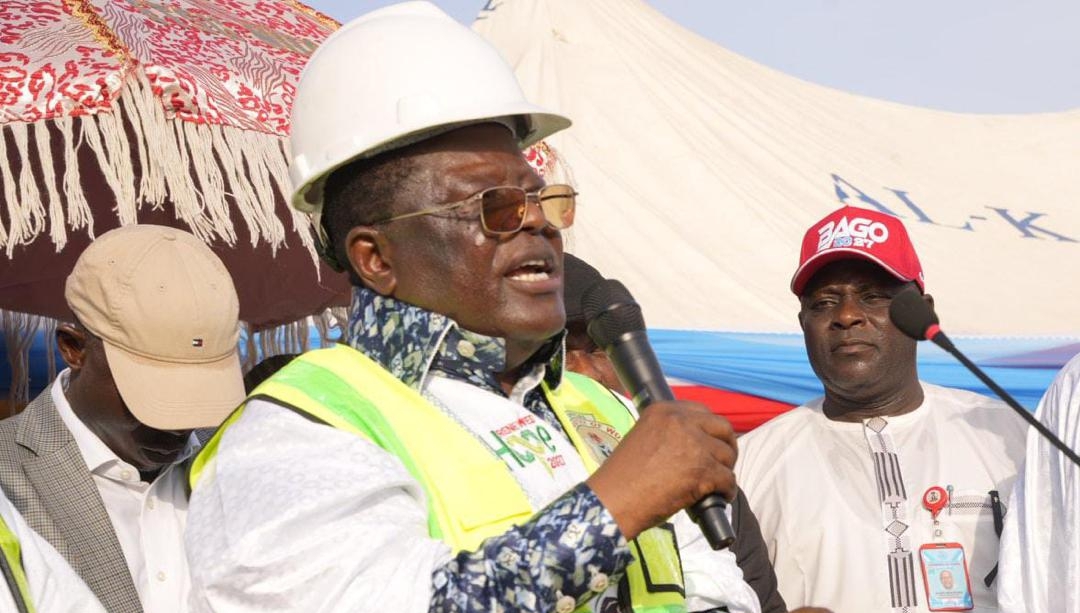


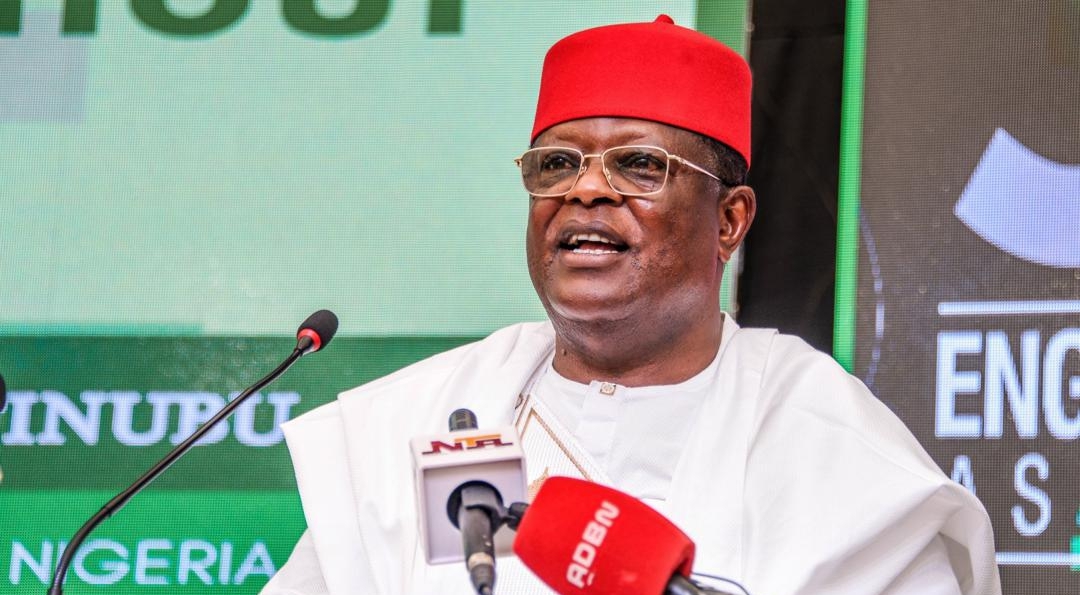
Minister of Works David Umahi has urged people of the Southeast to acknowledge the infrastructure projects of President Bola Ahmed Tinubu’s administration, saying they have transformed the region’s development outlook.
Umahi spoke when bishops and archbishops of the Methodist Church from the Southeast, led by Archbishop Vincent C. E. Onoh, paid him a courtesy visit at the Federal Ministry of Works headquarters in Abuja.

The minister acknowledged the region’s history of marginalization but said past grievances should not prevent residents from recognising current progress.
“Yes, I agree that in the past there was so much marginalization of the Igbo everywhere, not just the Southeast, but President Bola Tinubu has changed the narrative,” Umahi said.
He cited the ongoing reconstruction of the Enugu–Port Harcourt Road, the Enugu–Onitsha corridor, the Enugu– Abakaliki Road, the Eke–Obinagu Flyover and the Second Niger Bridge as major projects reshaping transportation and commerce in the region.
According to Umahi, the Enugu–Port Harcourt route had forced travellers to spend more than seven hours on what should have been a short journey.
He said its reconstruction, including sections built with reinforced concrete pavement, would significantly improve travel and economic activity.
He also disclosed that work on the First Niger Bridge was about 90 per cent complete, with rehabilitation being carried out around the clock. The bridge, he said, would feature solar lighting and CCTV surveillance.
Another major project, the highway corridor linking Calabar to Abuja through Ebonyi, Benue, Enugu and Kogi, is expected to sharply reduce travel times.
Umahi said travellers from Enugu could reach Abuja in about three hours, while those from Ebonyi could make the journey in roughly four.
The minister called on Southeast residents to demand more development while appreciating what had already been delivered.
“We can demand more so that we can meet up with the past marginalisation, but it shouldn’t make us not be appreciative,” he said.
He further defended the administration’s infrastructure spending, describing it as an investment capable of creating jobs, improving security, opening commercial corridors and strengthening Nigeria’s economy.
“We are borrowing to put in infrastructure, and this infrastructure, it is an investment,” Umahi said.
He urged church leaders to help educate the public—particularly young people—about the projects and to counter misinformation. He also called for political sentiments to be set aside in the interest of development.
The Methodist delegation commended Tinubu and Umahi for their infrastructure efforts, particularly in the Southeast. Archbishop Onoh said the church had come to express appreciation and honour the minister for his contributions.
Although the church does not traditionally confer traditional titles, Onoh said Umahi’s work had earned him widespread recognition, jokingly describing him as “Olu Atugwu 1.”
The archbishop also announced plans for prayer and public-sensitisation gatherings across Anambra, Enugu, Ebonyi and Imo states, with each major event expected to attract more than 5,000 people.
Umahi said his priority was to ensure that the projects already underway were completed. “If these projects are completed, we will never be the same again,” he said.