

A fresh political dispute has opened within President Bola Tinubu’s wider support camp after the Progressive Governors Forum said its members would not back the “Rainbow Coalition” associated with Minister of the Federal Capital Territory, Nyesom Wike.
While Wike insisted that support for Tinubu’s re-election should not require politicians to abandon their parties or surrender their own candidates.

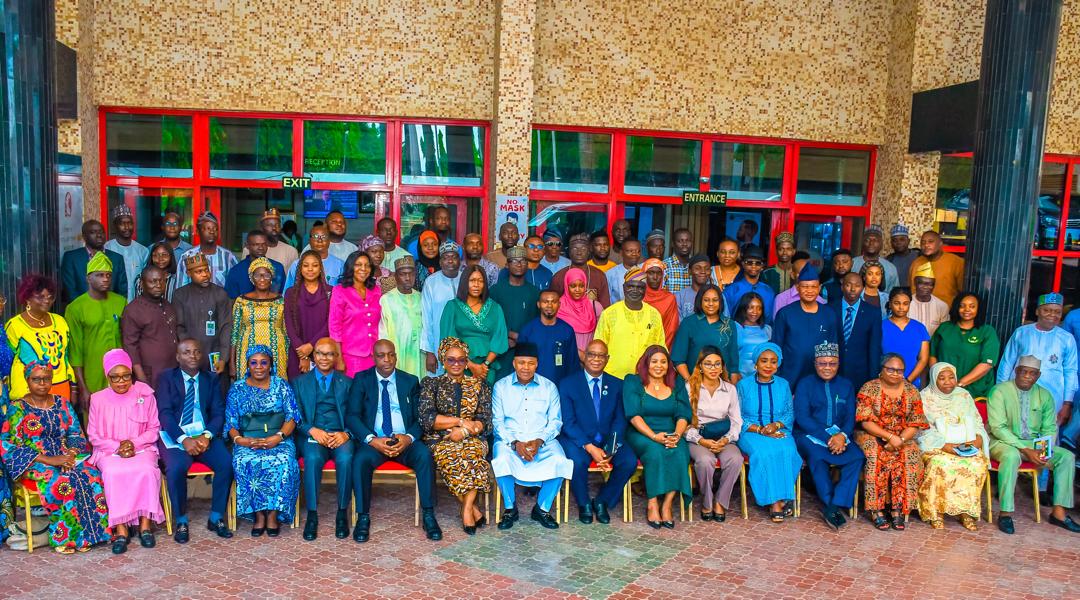
The governors’ position, announced by the forum’s chairman and Imo State Governor, Hope Uzodimma, followed a closed-door meeting in Abuja on Monday.
Uzodimma said the forum would not participate in, support or endorse any alliance capable of weakening the All Progressives Congress, creating divided loyalty or damaging APC candidates in the 2027 presidential, governorship, National Assembly and state assembly elections.
“The APC Governors Forum unanimously resolved that its members will not participate in, support or endorse any alliance or political arrangement capable of undermining the re-election of Mr President, weakening the APC or adversely affecting any candidate of the party at all levels,” Uzodimma said.
He added that the governors’ campaign commitment was exclusively to APC candidates and that the party’s campaign structure would operate in line with Tinubu’s political direction.
The forum also said its members had not entered into any formal agreement with an individual or opposition party ahead of the elections.
Wike: Governors cannot dictate every candidate
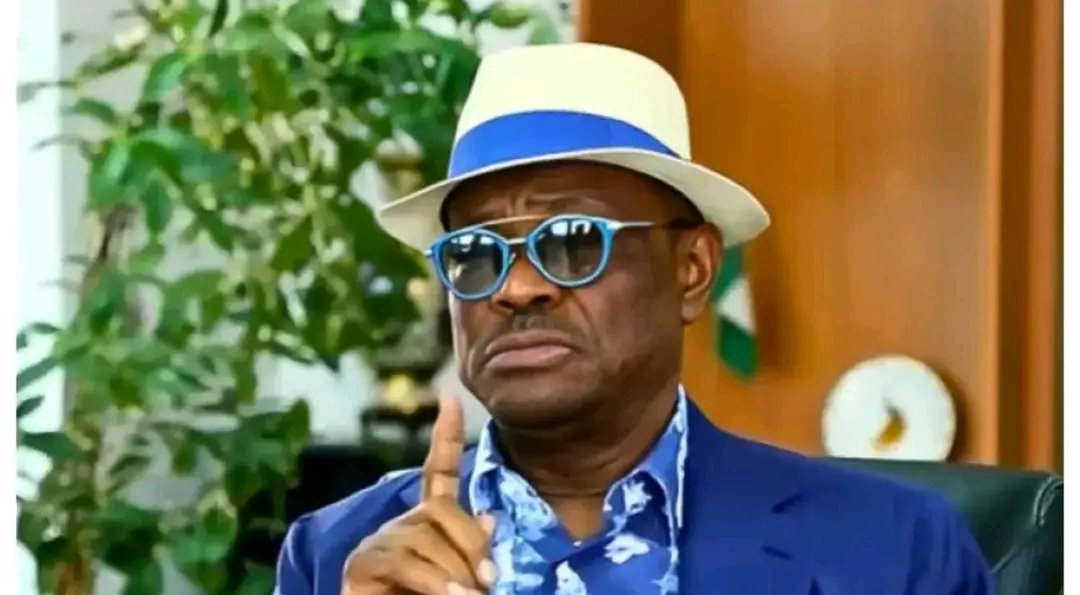
Wike has rejected the governors’ interpretation of his political project. In remarks reported on Tuesday, he argued that the coalition was designed to mobilise support for Tinubu at the presidential level, not to stop the Peoples Democratic Party or other parties from presenting candidates in the remaining contests.
“What I said and stand for is that I will mobilise support for the re-election of the President. I never promised anyone that PDP will not field candidates to contest governorship, National Assembly and States House of Assembly elections,” Wike said.
He described the Rainbow Coalition as a cross-party platform rather than an arrangement with the APC. According to him, politicians could support Tinubu for president while retaining their party identities and contesting legislative or governorship seats under their own platforms.
Wike said the governors’ influence should be rooted primarily in their states and accused some of them of attempting to impose candidates on politicians outside their immediate constituencies.
In the formulation attributed to him, he described his disagreement with the governors as the “crime” of refusing to accept candidates of their choice.
“They are governors, and I agree, but the influence should come more from their own states as far as this election is concerned,” Wike said. “I have heard them say I am presenting candidates, so I will have greater legislatures. How does that work?”
The minister also argued that Nigerian voters could distinguish between presidential and legislative contests.
He cited the 2023 elections in Imo, Abia, Enugu and Ebonyi, where, according to his account, APC candidates won some legislative seats even though Tinubu
performed poorly in the presidential vote in those states.
Wike used the examples to support his argument that a voter’s support for Tinubu would not automatically prevent that voter from choosing a candidate from another party for the Senate, House of Representatives or state assembly.
A dispute over party loyalty
The disagreement therefore turns on two competing interpretations of electoral coordination. For Wike, a broad coalition can increase Tinubu’s presidential vote by bringing together politicians and voters from different parties.
He has urged political actors to accommodate supporters outside the APC rather than treat cross-party backing as an attack on the ruling party.
For the APC governors, however, the arrangement risks producing conflicting campaign instructions.
A politician could publicly support Tinubu while campaigning against APC candidates in the same state or constituency.
The governors and some party stakeholders fear that such a structure could divide the ruling party’s vote, weaken its legislative strength and complicate the mobilisation of support for APC candidates at other levels.
Wike has challenged the idea that governors are the final authorities on political choices. In an interview reported by Leadership, he said that “most of us think because we are governors, we are the alpha and omega. Anything we say must happen. It is not true.”
He also maintained that supporting Tinubu was a personal political decision and did not require a formal bargain with the APC. Wike recalled that he and other members of the G5 did not negotiate with the APC before supporting Tinubu in the 2023 presidential election.
Tensions with Uzodimma and AbdulRazaq
The dispute has been sharpened by Wike’s earlier accusations against Uzodimma and Kwara State Governor AbdulRahman AbdulRazaq.
Wike alleged that the two governors were involved in efforts to frustrate his political activities and objected to claims that he was sponsoring candidates across states.
He said the removal of some senators and a member of the House of Representatives from the APC could leave them without a viable political platform, arguing that politicians who
joined his camp would be more likely to support Tinubu than those who moved to opposition parties.
Wike has nevertheless continued to present his presidential support as unequivocal.
He said he would not want Tinubu to lose in 2027 because he believed political opponents would target him if the president were defeated.
That position has created an unusual alignment: Wike remains a PDP chieftain and FCT minister in an APC-led federal government, yet he is campaigning for Tinubu’s re-election while defending the right of the PDP and other parties to compete against APC candidates in subnational and legislative elections.
What the confrontation means for 2027
The governors’ resolution does not, by itself, prevent Wike or other politicians from mobilising support for Tinubu outside the APC.
It does, however, establish that the official APC governors’ structure will not endorse a parallel arrangement that supports non-APC candidates or competes with the party’s candidates.
The immediate political test will be whether the two approaches can coexist in states where Tinubu needs support from politicians outside the APC but the party also wants a unified campaign for its governorship and legislative candidates.
If the coalition remains presidential-only, voters may face different alliances on the same ballot. If the APC governors insist on exclusive support for party candidate at every level, Wike’s network may become a direct competitor to the party’s state-level structures.
For now, both sides say they support Tinubu. Their disagreement is over who should control the machinery around that support, how far governors’ authority should extend beyond their states and whether backing the president can be separated from backing APC candidates who will contest alongside him.