


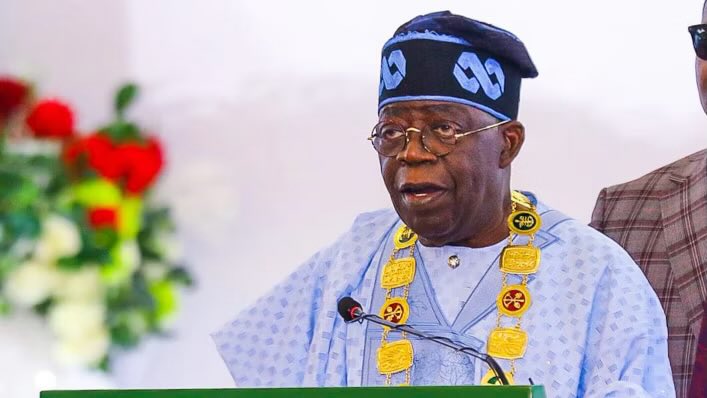
The high-stakes political drama in Osun State took a dramatic turn on August 6, 2026, as President Bola Ahmed Tinubu issued a direct intervention in standoff between the Economic and Financial Crimes Commission (EFCC) and the Osun State Government.
The conflict, which had threatened to paralyze the state just days before the August 15 governorship election, shifted from a legal confrontation to a test of institutional independence and executive discretion.
Anatomy of the Crisis: The N11 Billion Standoff
The crisis erupted when the EFCC obtained a court order to place a “post-no-debit” restriction on Osun State’s statutory allocation accounts, citing an ongoing N11 billion investigation into alleged financial mismanagement.
The commission defended the move as a preventive measure to halt suspicious fund transfers detected since August 2,
2026.
However, Governor Ademola Adeleke and the state’s Attorney-General, Oluwole Jimi-Bada (SAN), swiftly condemned the action as “illegal political sabotage,” arguing that freezing statutory accounts without explicit judicial clarity on such a scale was an abuse of the rule of law that targeted workers’ salaries and essential services.
The Presidential Directive: A Call for De-escalation
In a swift response to the growing national outcry, President Tinubu issued a statement directing the EFCC to immediately vacate the court order and
discontinue its current action against the Osun State Government.
While the President reaffirmed his commitment to the independence of anti-corruption agencies, he expressed
deep concern over the “inauspicious” timing of the freeze, noting that such actions on the eve of an election could be misconstrued as federal interference.
“Osun State is only a few days away from its gubernatorial election. Therefore, nothing ought to be done to give an impression that the EFCC or indeed any other agency of the federal govt is being used to interfere with the election.”
The President emphasized that while institutions must function independently, the overriding public interest in preserving the “integrity, credibility, and fairness” of the democratic process necessitated his intervention.
Divergent Reactions and Political Crossfire
Prior to the President’s directive, the political landscape had already fractured along partisan lines.
The All Progressives Congress (APC) in Osun had backed the EFCC’s scrutiny, alleging that incumbent administration was using the state resources for widespread vote-buying under the guise of worker palliatives.
Conversely, the African Democratic Congress (ADC) had characterized the freeze as “political terrorism,” accusing the federal government of weaponizing poverty to influence the poll.
The Presidential directive has now introduced a new layer of complexity. While it provides immediate relief to the Osun State treasury and civil servants, it also raises questions about perceived independence of the EFCC.
Critics of the administration may view the directive as a necessary correction of an overzealous agency, while others might question the precedent of executive intervention in ongoing financial investigations.
Editorial Reflection: The Delicate Balance of Power
The resolution of the Osun “frozen coffers” crisis through a presidential directive highlights the fragile equilibrium of Nigeria’s democratic institutions.
President Tinubu’s move to vacate the freeze appears to be a strategic de- escalation aimed at ensuring a peaceful and credible election on August 15.
By prioritizing the “optics” of fairness, the Presidency has sought to distance itself from allegations of using state apparatus for partisan gain.
However, the episode leaves behind significant institutional questions. The tension between the EFCC’s mandate to prevent the pillaging of public funds and the need to protect the democratic process from institutional interference remains unresolved.
For Nigerian democracy to truly mature, the country must move toward a system where such conflicts are resolved through transparent judicial processes rather than eleventh-hour executive interventions.
As the people of Osun prepare to vote, the focus returns to the ballot box. The challenge for all stakeholders now is to ensure that the upcoming election is decided by the will of the electorate, free from the shadows of fiscal blockades or institutional overreach.