

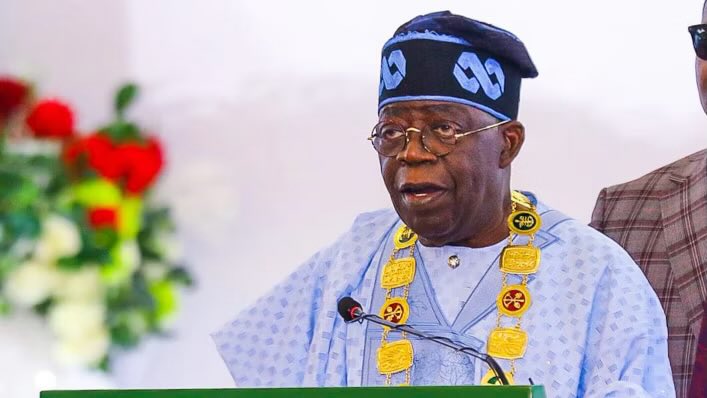
President Bola Tinubu has urged African countries to form an aggressive alliance to end the export of raw minerals and ensure the continent benefits from its vast natural resources.
Speaking at the Africa Minerals Strategy Group (AMSG) High-Level Roundtable in New York, Tinubu said Africa must move beyond supplying raw materials and develop local industries for processing, manufacturing and value addition.
The roundtable, held on the sidelines of the 81st United Nations General Assembly, focused on transforming Africa’s mineral wealth into sustainable economic growth.
Its theme was: “From Resources to Wealth: Continental Cooperation for Mineral Value Addition, Data Sovereignty, Innovative Financing and Critical Minerals Security.”
In an address delivered by Vice-President Kashim Shettima, Tinubu said Africa could not claim to be wealthy while its mineral-rich communities remained trapped in poverty.
“For generations, Africa has furnished the materials of prosperity elsewhere. Our duty is to ensure that the future being fashioned from African minerals has room for African ambition,” he said.
The President noted that rising global demand for cobalt, copper, lithium and rare earth elements had made Africa’s resources critical to clean energy, artificial intelligence and advanced manufacturing.
He called for investments in refining, battery production, component manufacturing, technology transfer and skills development, saying the success of mining should be measured by the jobs, infrastructure and prosperity it creates for local communities.
Tinubu warned that African countries would weaken their bargaining power if they competed against one another through lower royalties, weak local-content rules and excessive concessions.
“Fragmentation leaves us exporting raw materials and buying finished goods at a premium. Cooperation gives our markets scale, our industries integration, our financing reach and our negotiations authority,” he said.
He also outlined Nigeria’s mining reforms, including mandatory local value addition for new licences, improved geological data, support for artisanal miners, stronger action against illegal mining and greater regulatory accountability.
According to the President, revenue from Nigeria’s mining sector rose from about ₦6 billion in 2023 to more than ₦38 billion in 2024, and between ₦68.1 billion and ₦70 billion in 2025.
He cited new foreign investment commitments and lithium-processing capacity in Nasarawa State as evidence of the sector’s potential.
The roundtable adopted a proposed Continental Integration and Economic Assurance Declaration, designed to create a unified framework for Africa’s critical-mineral value chains, strategic mineral corridors, infrastructure and responsible investment.
Tinubu called for the declaration to be backed by clear timelines, financing mechanisms and public accountability, insisting that Africa must negotiate with one voice. “Minerals confer no automatic prosperity; vision, investment and industry must earn it,” he said.